Body Doubling for Students: The Science Behind Studying Better With Others
Discover how body doubling helps students stay focused, overcome procrastination, and study more effectively. Learn the science behind studying with others, the benefits of online study rooms and focus sessions, and how Study Mates creates a distraction-free environment that boosts productivity and academic success.
Why Studying Alone Feels Harder Than It Should
You sit down at your desk with every intention of studying. Your books are open, your notes are ready, and your phone is placed face down. Ten minutes later, you're checking notifications, staring out the window, or convincing yourself you'll start "after just one more video."
Sound familiar? You're not alone — and that's actually the point.
Many students struggle with focus, not because they're lazy or unmotivated, but because the human brain is naturally wired for social connection. Researchers and productivity experts have discovered that simply having another person present during a work or study session can significantly improve concentration and task completion. This technique is called body doubling, and it's changing the way students approach online study, group study, and personal productivity.
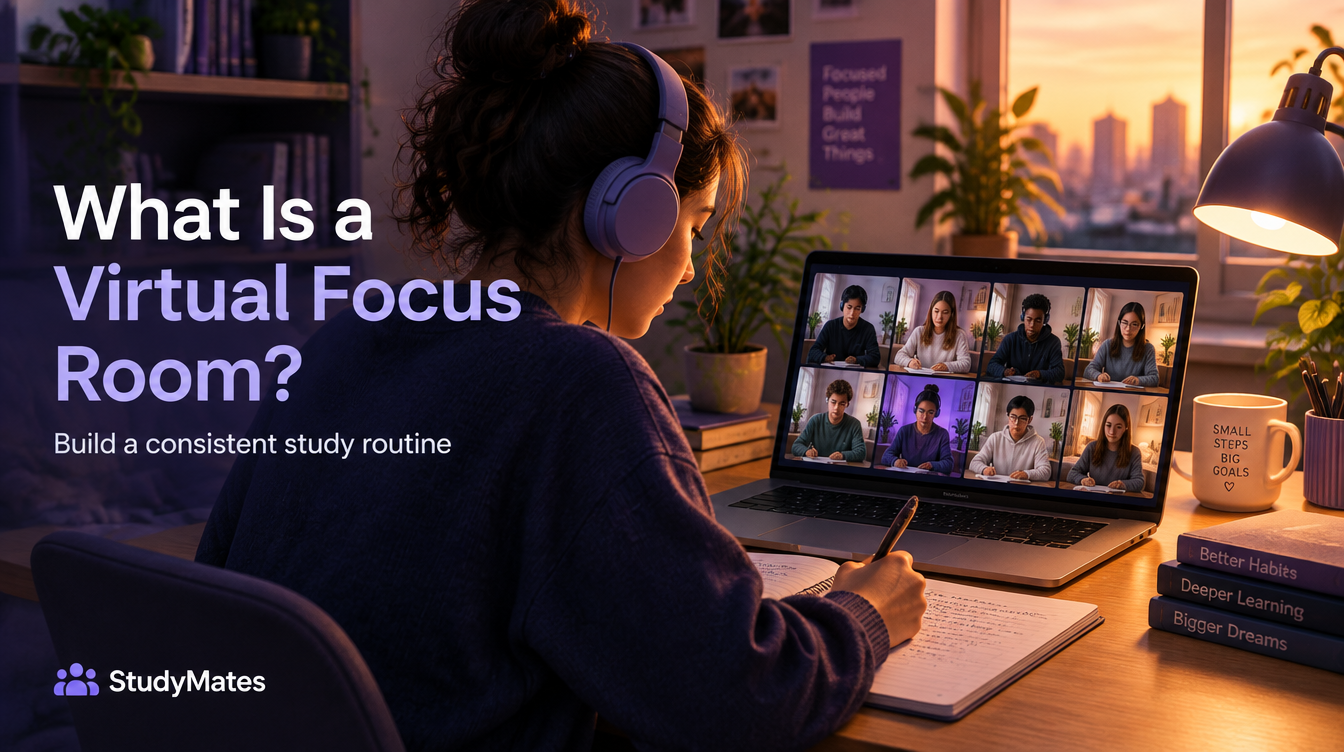
Today, body doubling has evolved well beyond physical classrooms. Students are joining Study Mates sessions, virtual online rooms, and dedicated focus rooms where they can study alongside others — distraction-free — from anywhere in the world.
In this article, we'll explore the science behind body doubling, why it works, and how platforms like Study Mates are transforming the way students learn and stay focused.
Know More About Online Study Rooms
What Is Body Doubling?
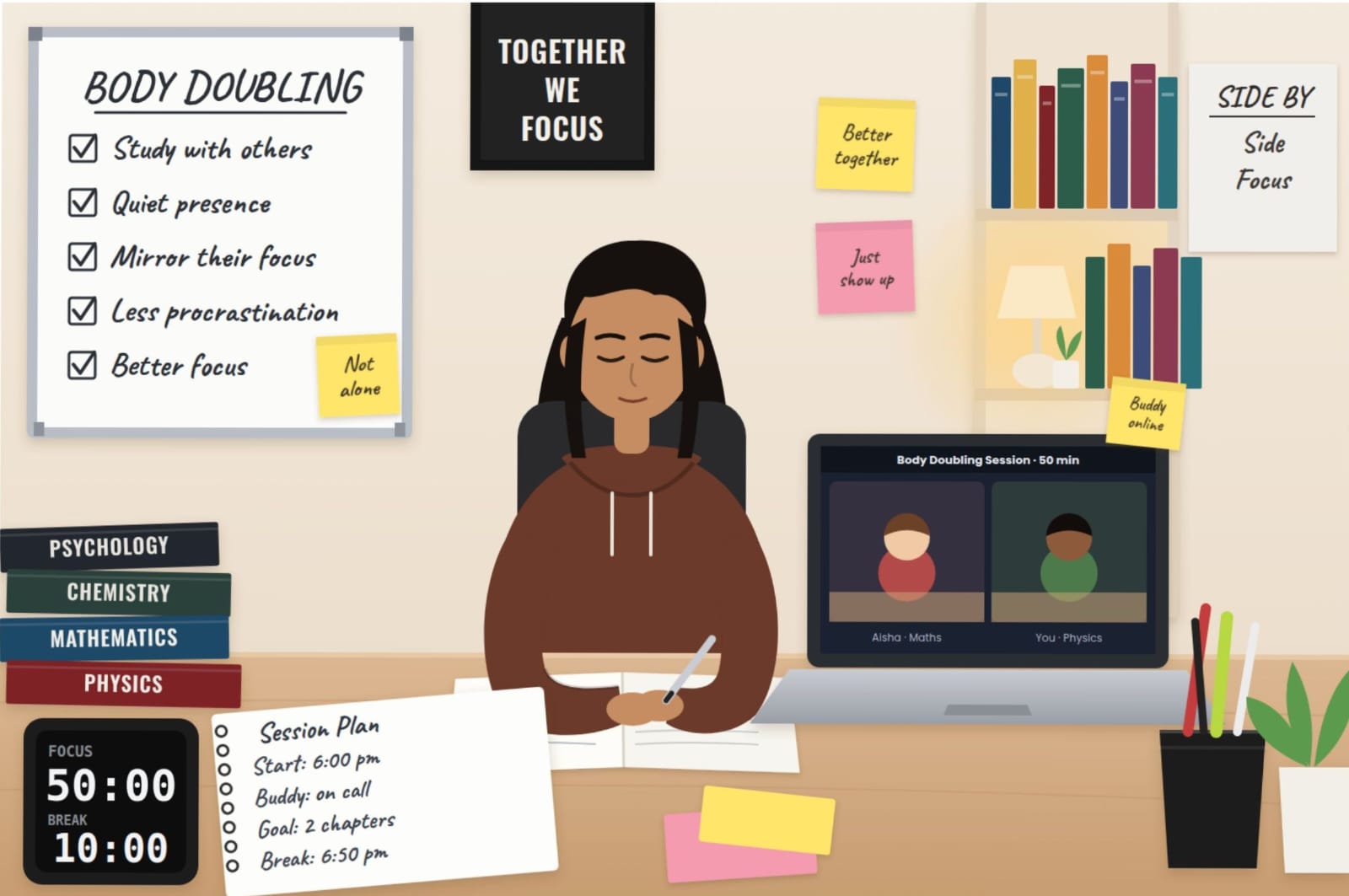
Body doubling is a productivity technique where a person completes tasks while another individual is present nearby. The second person doesn't necessarily teach, assist, or even interact much — their presence alone creates a psychological effect that improves focus and task completion.
Originally developed as a strategy for individuals with attention difficulties, body doubling has grown into a mainstream productivity method embraced by students worldwide.
How It Works in Practice
Imagine two students preparing for the same exam:
● Student A studies alone at home and checks social media every 15 minutes.
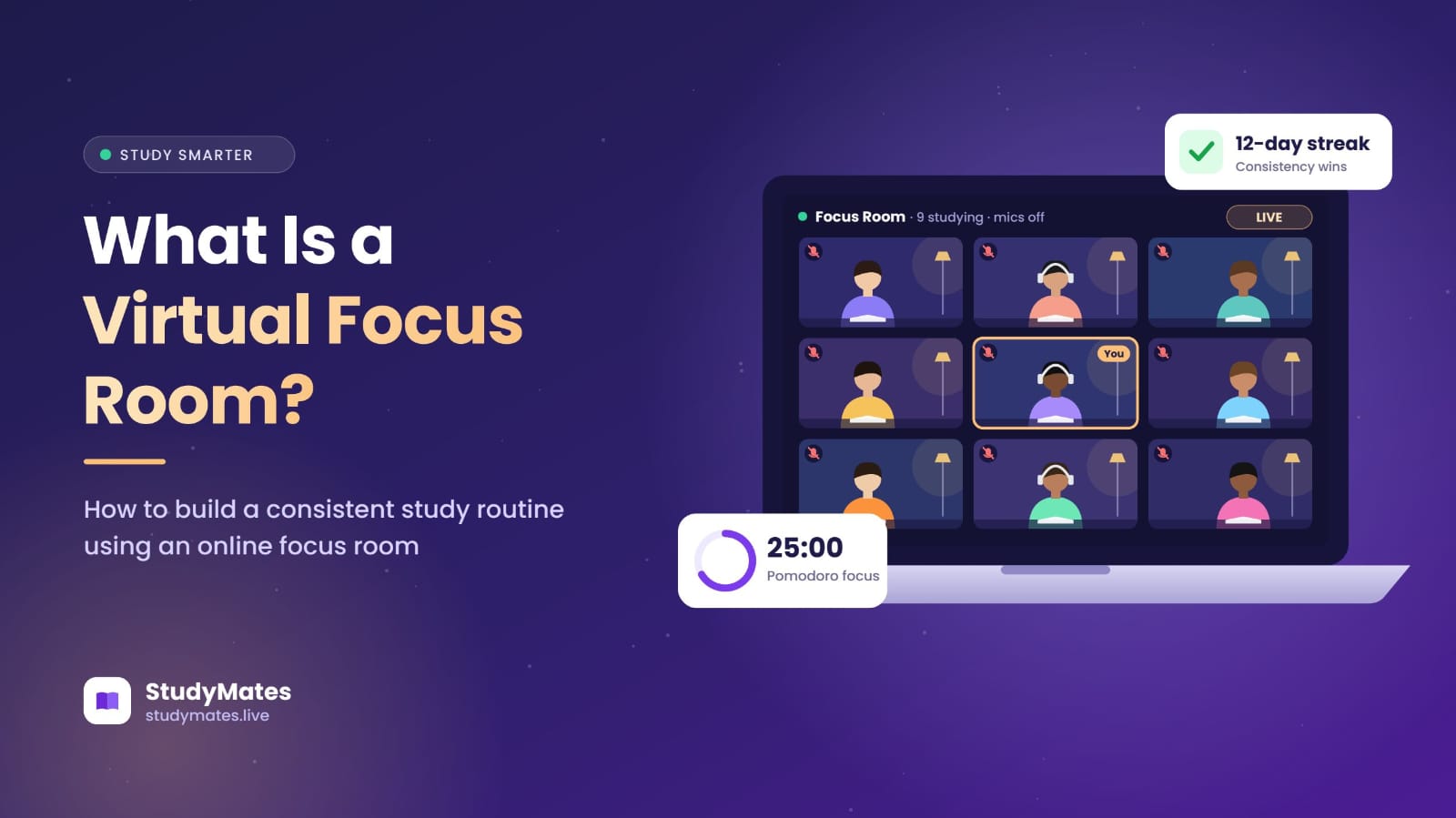
● Student B joins a virtual focus room on Study Mates with several peers silently working together.
After two hours, Student B is far more likely to stay consistent and complete their planned tasks.
A recent student productivity survey found that approximately 68% of students reported better concentration when studying with peers compared to studying alone. That's a significant difference — and science explains exactly why.
The Psychology Behind Why Students Study Better With Others
The effectiveness of body doubling isn't coincidental. Several well-established psychological principles explain why it works so consistently.
1. Social Facilitation Improves Performance
The concept of social facilitation suggests that people perform tasks more effectively when others are present. Psychologists have long observed that the awareness of being around others increases motivation and raises attention levels naturally.
Studies suggest that students working in collaborative or monitored environments experience productivity improvements of 15–30% compared to those studying in complete isolation.
2. Accountability Creates Consistency
When students know others are studying alongside them, a natural sense of accountability kicks in. Nobody wants to be the one scrolling aimlessly while everyone else is focused and productive.
This subtle social pressure tends to increase:
● Total time spent studying
● Task completion rates
● Session consistency over days and weeks
For example, a student who plans to revise chemistry for 45 minutes alone might quit after 20 minutes. That same student in an online room with accountability partners often completes the full session — and sometimes goes beyond it.
3. Reduced Decision Fatigue
One of the biggest hidden reasons students procrastinate is decision fatigue — the mental exhaustion caused by constantly deciding:
● When should I start studying?
● How long should this session be?
● Should I take a break now or keep going?
Structured group study environments and virtual study sessions eliminate most of these decisions before a session even begins. Students can sit down and immediately focus entirely on learning, rather than planning how to begin.
How Online Study Platforms Are Reinventing Body DoublingTechnology has completely transformed traditional study habits. Students no longer need to physically share a library or classroom to experience the benefits of studying together.
Online Rooms Build Focus Without Distractions
A virtual online room creates a dedicated environment where students work together — but keep conversation and interruptions to an absolute minimum.
Key benefits include:
● Scheduled, structured study sessions
● Shared productivity goals
● Quiet, distraction-minimized environments
● Flexible participation from any location
Students can feel the energy of studying together regardless of where they are in the world.
Focus Rooms Encourage Deep Work
A focus room takes virtual productivity a step further. Rather than casual co-studying, these spaces typically incorporate proven techniques such as:
● Pomodoro sessions — timed 25-minute work blocks with short breaks
● Deep work intervals — extended focus periods of 50–90 minutes
● Silent accountability systems — where presence itself creates discipline
● Goal tracking — so students enter with a clear plan and leave with results
Research suggests that structured, focused work intervals can improve individual productivity by nearly 25% compared to unstructured study time.
Why Study Mates Are Becoming Essential for StudentsTraditional solo studying often feels isolating and difficult to sustain over time. This is exactly where finding the right study mates makes a meaningful difference.
Study Mates Provide Ongoing Motivation
Studying with peers generates shared energy. Watching others actively prepare for exams — even silently — encourages students to keep going when motivation dips.
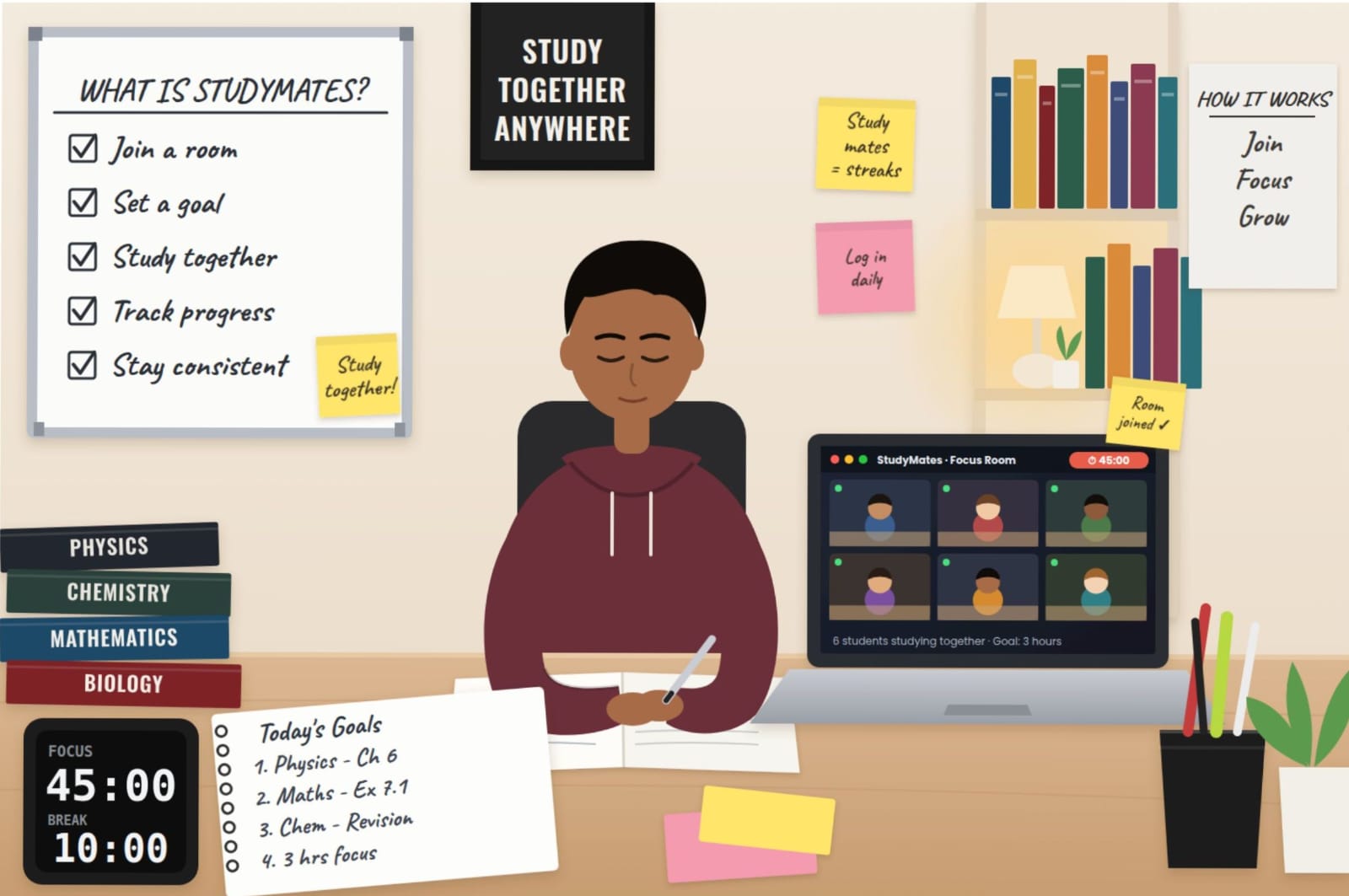
Take Riya, a university student preparing for competitive entrance exams. She struggled to study for more than one hour alone before losing focus. After joining virtual study sessions with her study mates on Study Mates, she consistently completed three-hour study blocks within two weeks. The environment changed her habits.
Study Mates Reduce Procrastination
Students frequently delay starting tasks because there's no immediate accountability when studying alone. When learners become part of a productivity community, starting becomes significantly easier — because others are already working.
Nearly 72% of students using virtual accountability systems reported reduced procrastination habits, according to recent productivity research.
Study Mates Make Group Study More Effective
Traditional group study sessions often drift into social gatherings rather than productive work time. Modern study platforms like Study Mates strike the right balance between:
● Social support and human connection
● Individual focus and personal accountability
● Progress tracking and goal setting
● Minimal distractions and structured time
This combination helps students stay efficient without feeling isolated or overwhelmed.
Online Study Rooms:- Buy Subscription Now
Practical Ways to Start Body Doubling Today

1. Join an Online Study Community
Look for platforms that offer virtual study spaces, silent study sessions, accountability features, and productivity tracking. Study Mates brings all of these together in one focused environment built specifically for students.
2. Use Focused Time Blocks
Combine body doubling with proven productivity techniques:
● 25-minute Pomodoro sessions followed by 5-minute breaks
● 50-minute deep work blocks for more intensive study
● Scheduled breaks to maintain mental energy throughout the session
3. Find Consistent Study Mates
Consistency matters more than group size. Two or three committed study partners who show up regularly will almost always outperform a large, unfocused study circle.
4. Set Specific, Measurable Goals
Instead of vague intentions like "I'll study biology," try:
"I'll complete Chapters 4 through 6 and finish 20 practice questions in the next 90 minutes."
Specific goals tied to a time limit increase completion rates dramatically and give each session a clear sense of purpose.
Common Mistakes to AvoidEven the most effective methods fail when used incorrectly. Watch out for these common pitfalls:
Turning study sessions into social sessions. Too much conversation defeats the core purpose of body doubling. A simple rule: focus first, socialize later.
Joining large, unstructured groups. Big groups without clear structure often reduce productivity rather than improve it. Smaller, focused environments consistently work better.
Skipping breaks. Continuous, uninterrupted studying leads to burnout and declining retention. Short, scheduled breaks improve both mental energy and long-term memory consolidation.
Conclusion: Success Often Starts With Simply Not Studying AloneStudents often assume that productivity depends entirely on personal motivation or willpower. Science suggests something far simpler: humans perform better when they feel connected to others.
Body doubling works because it combines psychology, accountability, and social presence into a practical system that makes studying smarter — not harder.
As digital learning continues to grow, online study communities, study mates, virtual rooms, and focus sessions are becoming essential tools for students who want better concentration and stronger academic results.
Sometimes the difference between procrastination and productivity isn't finding more motivation. It's simply finding the right people to sit beside — even virtually.
Join Study Mates today and discover how much more you can accomplish when focus stops feeling like a solo challenge.
Frequently Asked Questions1. What is body doubling for students?
Body doubling is a study technique where students work alongside others — either physically or virtually — to improve concentration, accountability, and task completion. The presence of another person creates a natural psychological effect that makes it easier to stay focused.
2. How do study mates improve productivity?
Study mates create motivation and accountability through shared presence. When students know others are studying alongside them, they're more likely to stay on task, complete sessions, and return consistently — reducing both procrastination and burnout.
3. Are online study rooms effective?
Yes. Structured online rooms like those on Study Mates help students minimize distractions and maintain concentration through shared, goal-oriented study environments. The virtual format means students can access this accountability from anywhere.
4. What is the difference between a focus room and group study?
Traditional group study often involves active discussion, collaboration, and explanation — which can easily become social time. A focus room, by contrast, emphasizes silent individual work, timed productivity sessions, and personal goal tracking with the added benefit of social accountability.
5. Can body doubling help students who struggle with procrastination?
Absolutely. Research and student feedback consistently show that body doubling reduces procrastination by making it easier to start tasks and maintain momentum. When others are already working around you, beginning your own work feels far less daunting.