Why Studying Alone Fails: 10 Proven Ways to Stay Accountable Online
Studying alone often leads to procrastination and inconsistency due to a lack of accountability. Discover 10 proven strategies to stay focused, build better study habits, and boost productivity using online study communities, accountability partners, live study rooms, and effective focus techniques.
You sit down with good intentions. Books open, laptop ready, and a quiet promise in your head:
today, I'll actually get things done.
For the first twenty minutes, it works. You highlight notes, answer a few questions, and feel like you're moving forward.
Then your phone buzzes.
"Just one minute" turns into five notifications. A short break turns into an hour of scrolling. By evening, the guilt has crept in, and you're promising yourself you'll do better tomorrow.
If this sounds familiar, you're not alone — literally. Studying alone feels productive because silence looks like focus. But isolation hides a real problem: there's no one to notice if you skip a day, no one to check whether you finished that chapter, and no one to celebrate your progress when you do.
The problem was never laziness. It's that carrying an entire goal by yourself is exhausting — and unsustainable.
Why Accountability Beats Willpower
 Motivation behaves like weather: some days it's there, some days it isn't. If consistency depended purely on willpower, almost no one would finish what they start.
Accountability fills that gap. Think about running a marathon alone on an empty road versus running it surrounded by hundreds of other people. Your legs and your energy are the same either way — but somehow, you push harder when others are pushing too.
Studying works the same way. Platforms like StudyMates tap into this by offering live study rooms, focus tracking, and study communities where people quietly motivate each other just by showing up.
10 Proven Ways to Stay Accountable While Studying Online
1. Schedule Study Sessions Like Real Appointments
A study session with no set time is easy to skip. Once it's on your calendar, it becomes a commitment — not just an idea you might get to later.
2. Join Live Study Rooms
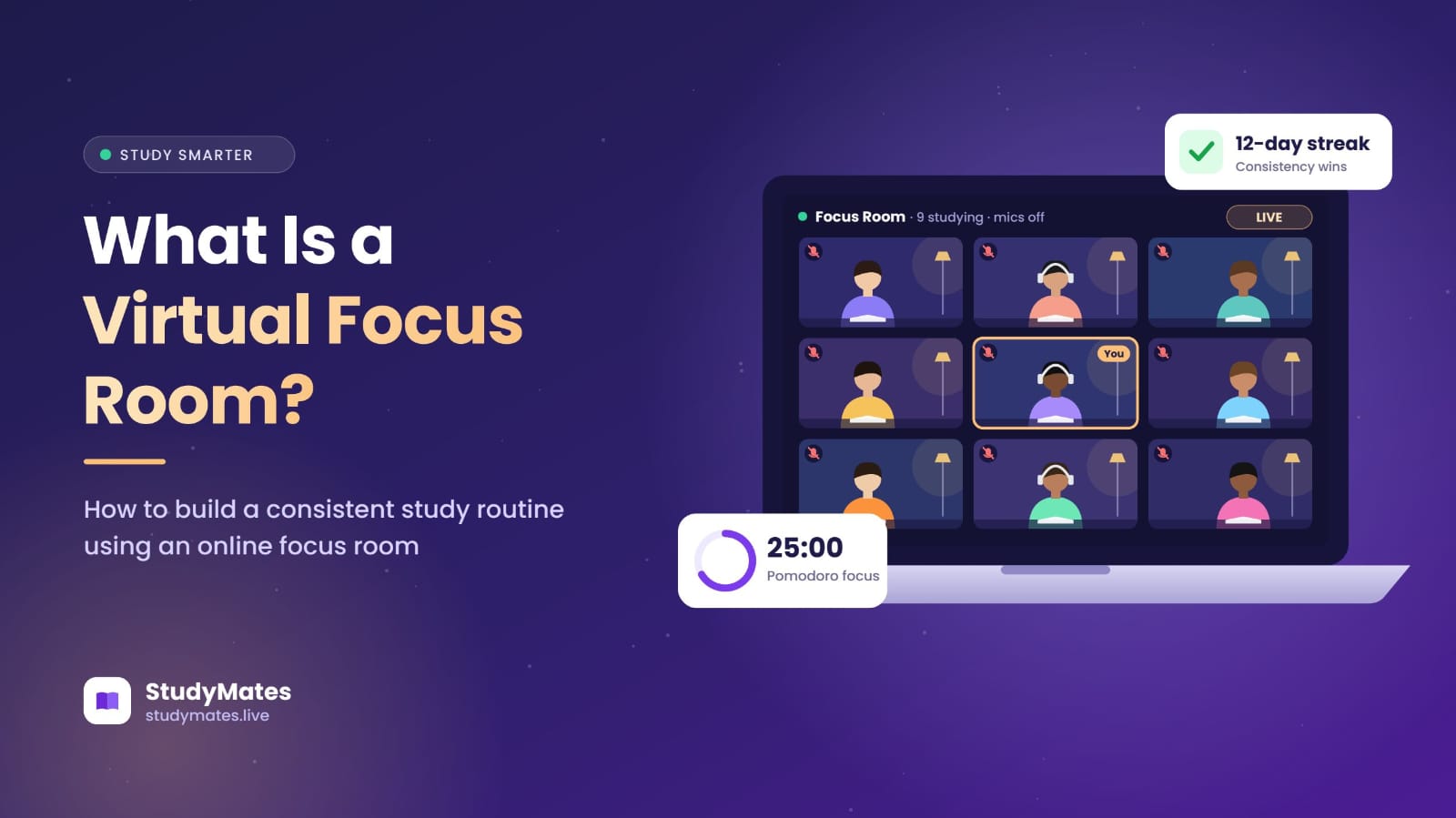
There's something quietly powerful about seeing real people studying alongside you. Tools like StudyMates use live rooms — cameras on, mics off — so you can focus in the same space as others without any distraction. It feels a lot like sitting in a library full of people working toward their own goals.
3. Say Your Goals Out Loud (To Someone Else)
A goal that stays in your head is easy to abandon. Try sharing something specific instead:
● Finish two chapters
● Solve twenty practice problems
● Study for three focused hours
Once someone else knows your target, your brain tends to take it more seriously.
4. Track Your Progress
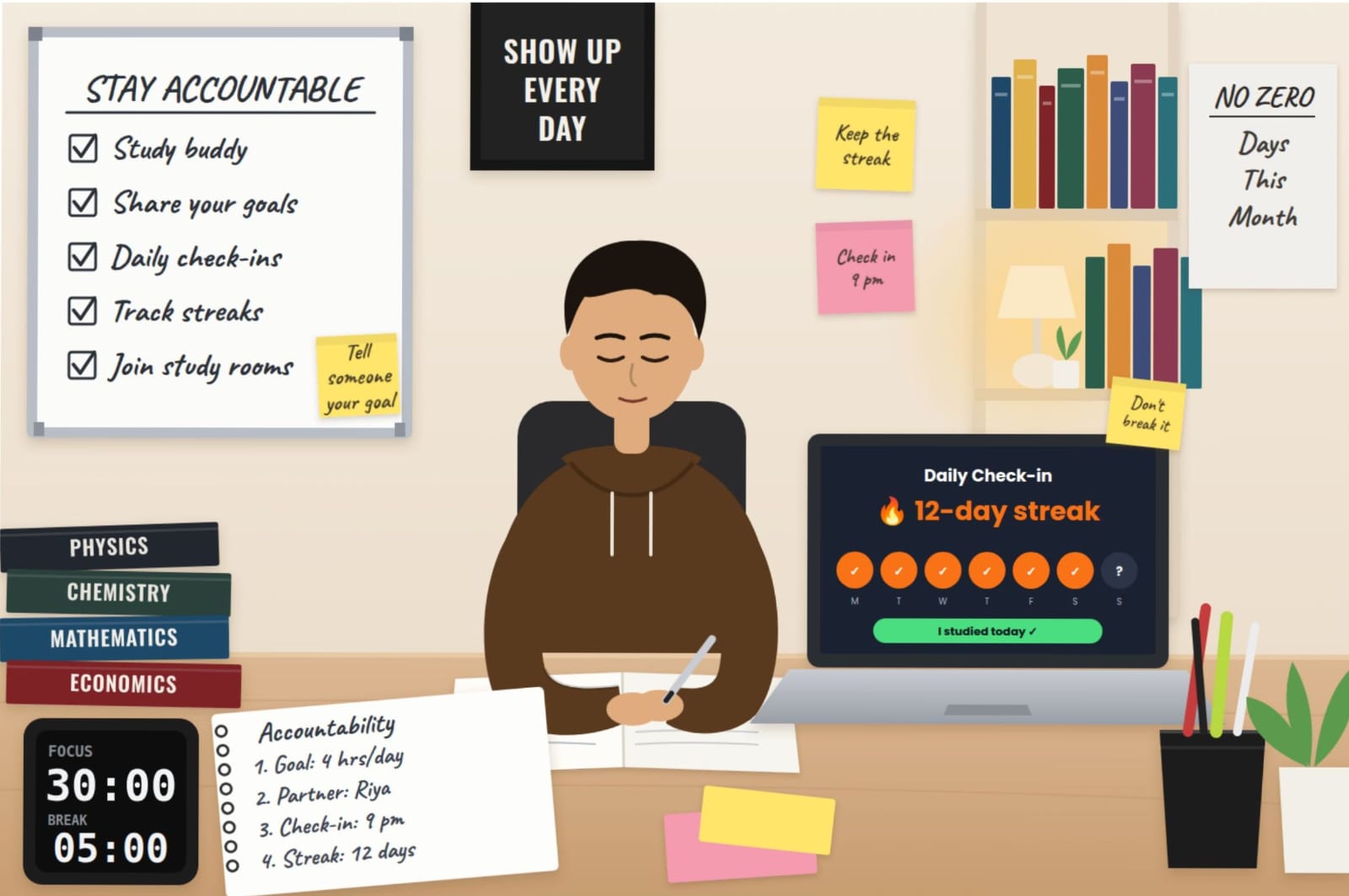
Effort feels invisible until you measure it. Logging your study hours or completed tasks gives you proof that you're moving forward — and that proof builds momentum, which builds habits.
5. Find an Accountability Partner
You don't need a tutor or a best friend. You just need one person who checks in regularly and reminds you that you're not doing this alone. Students in online communities often seek this out specifically because regular check-ins cut down on procrastination.
6. Join a Community With the Same Goal
Studying for a medical exam feels nothing like prepping for finals or a coding interview. Being around people chasing the same goal makes the struggle feel normal instead of isolating — and when someone else gets through a hard chapter, you start believing you can too.
7. Use Focus Techniques Like Pomodoro
Long, open-ended study blocks feel overwhelming. Break them down instead:
1. Study for 25 minutes
2. Rest for 5 minutes
3. Repeat
Small wins are easier to chase than one giant, undefined task.
8. Make Your Goals Public
Posting your study targets in a group or community creates gentle pressure — people naturally want their actions to match what they said they'd do. Once it's public, quitting halfway feels a lot harder.
9. Celebrate Progress, Not Perfection
One missed session doesn't ruin the week — even though it can feel that way. Growth rarely happens in a straight line; it happens through small, repeated effort. Celebrate the chapter you finished. Celebrate the streak you kept. Celebrate simply showing up.
10. Build an Environment That Doesn't Feel Lonely
Most students don't struggle because the material is too hard — they struggle because the process feels emotionally heavy. Platforms like StudyMates are built around exactly this: helping students feel supported through live study environments where someone, somewhere, is always studying alongside them.
Studying Alone vs. Studying With Accountability
Studying Alone
Studying With Accountability
Easy to procrastinate
Encourages consistency
Motivation fades quickly
Shared energy keeps you going
No external support
Real community support
Progress feels invisible
Progress is measurable
Online learning has changed what "studying together" means. You no longer need to sit in the same room as your classmates to feel supported — a student in Delhi and a student in Singapore can study side by side, in real time, and feel exactly the same sense of shared effort.
The Bottom Line
Studying alone doesn't fail because you lack intelligence or willpower. It fails because no one is built to carry every challenge in isolation.
We've all had the night where the book stays open but nothing goes in — where guilt quietly whispers that you're falling behind. Those nights don't mean you're failing. They mean you need support, not more pressure.
One study session. One partner. One community. Sometimes the difference between giving up and moving forward isn't studying harder — it's simply not studying alone.

Frequently Asked Questions
Why is studying alone so difficult? Studying alone is hard because there's little built-in accountability, motivation fades faster without support, and distractions are easier to give in to when no one's watching.
What does "online accountability" mean for studying? It means using digital tools, study partners, or communities to help you stay consistent — things like live study rooms, progress trackers, and check-ins with other students.
Do virtual study rooms actually work? Yes. They create a sense of social presence, and that presence alone reduces procrastination by making students feel focused and connected, even remotely.
How can I stay motivated while learning online? Set small, specific goals, track your progress, use a technique like Pomodoro, and join a community of people working toward similar goals.
Can accountability really improve productivity? Yes — accountability builds consistency and better habits over time, and it directly reduces the tendency to delay important work.