CBSE Board Exam Preparation: A Simple Study Guide
Prepare for CBSE board exams with a realistic study plan, chapter-wise revision, sample-paper practice, and simple ways to stay focused without last-minute stress.
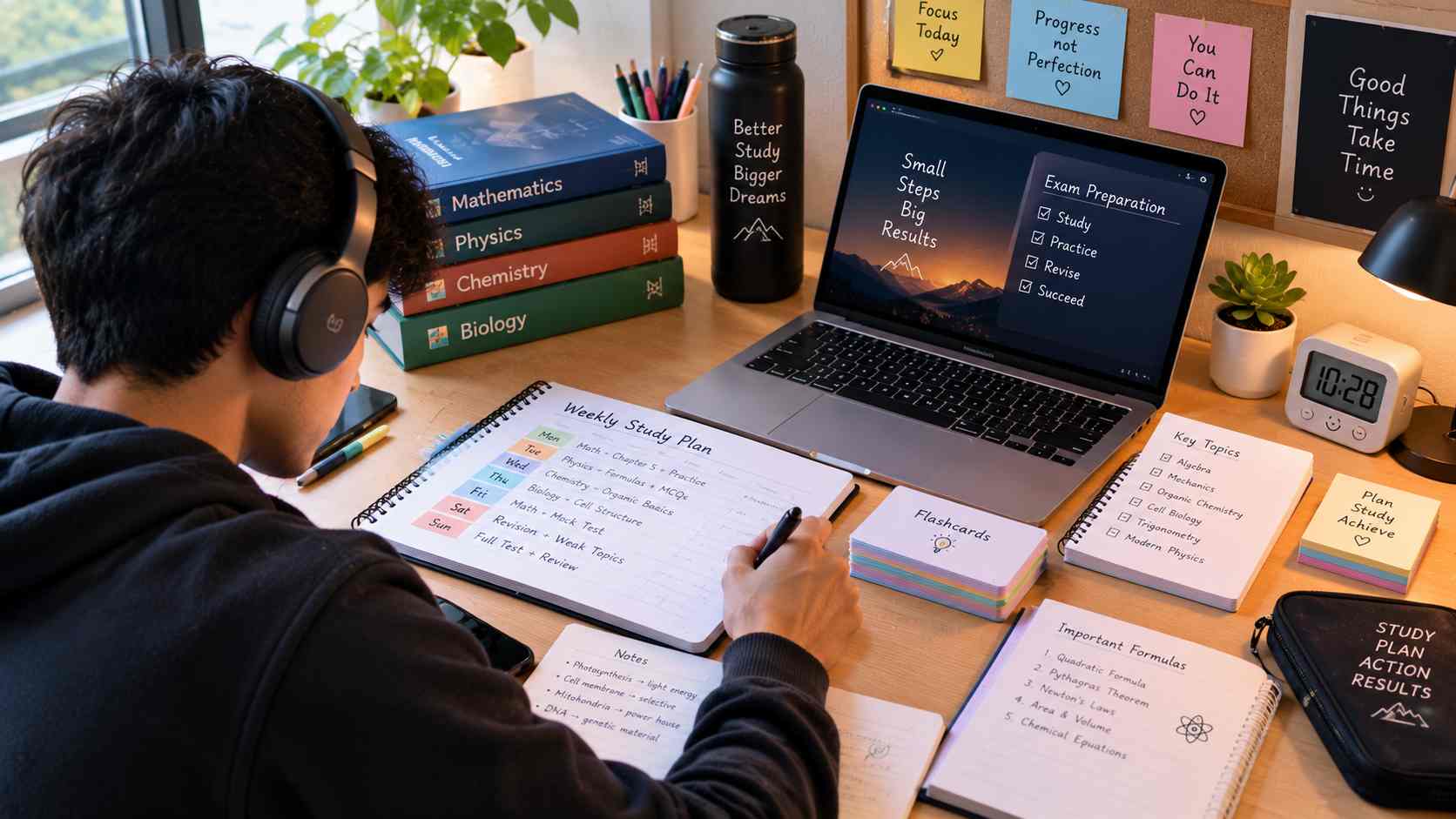
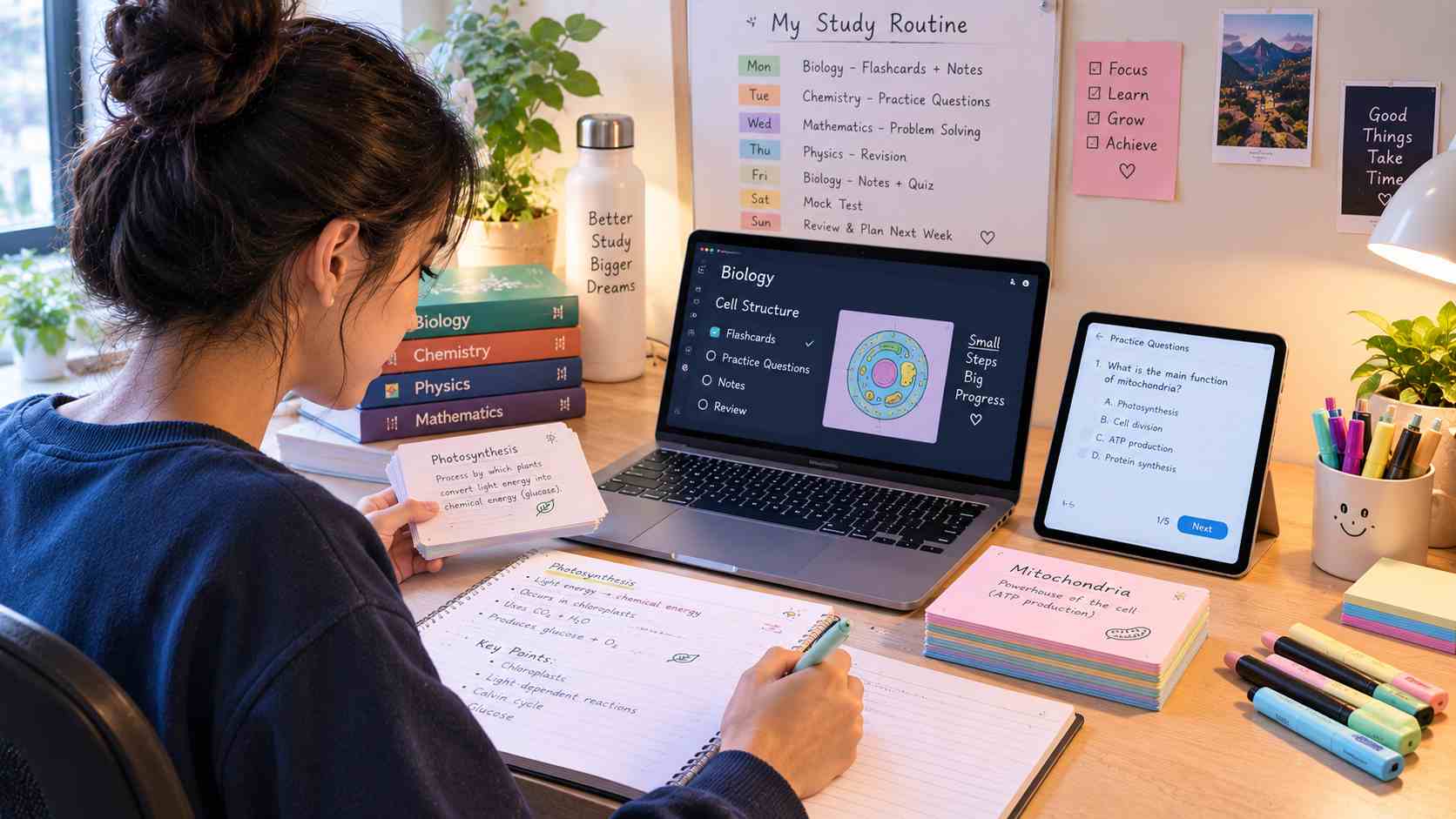
CBSE board exams can feel stressful when several subjects, chapters, assignments, and practicals need attention at the same time. You may be unsure whether to revise old chapters, finish the syllabus, or start solving sample papers. The solution is not to study every subject all day. It is to make a clear plan and use your study time for specific tasks. This guide explains how to organize your preparation, revise effectively, practise exam-style questions, and keep your routine realistic.
1. Check Your Syllabus and Current Preparation
Start by reviewing the official syllabus and your school’s exam instructions for each subject. Make a chapter checklist and mark each topic as confident, needs revision, or not yet understood. This gives you a realistic view of the work left instead of relying on a vague feeling that you are behind. Check your class notes, prescribed textbooks, school worksheets, and relevant sample papers. Keep your plan aligned with the syllabus and materials for your own class and exam year.
2. Make a Practical Study Timetable
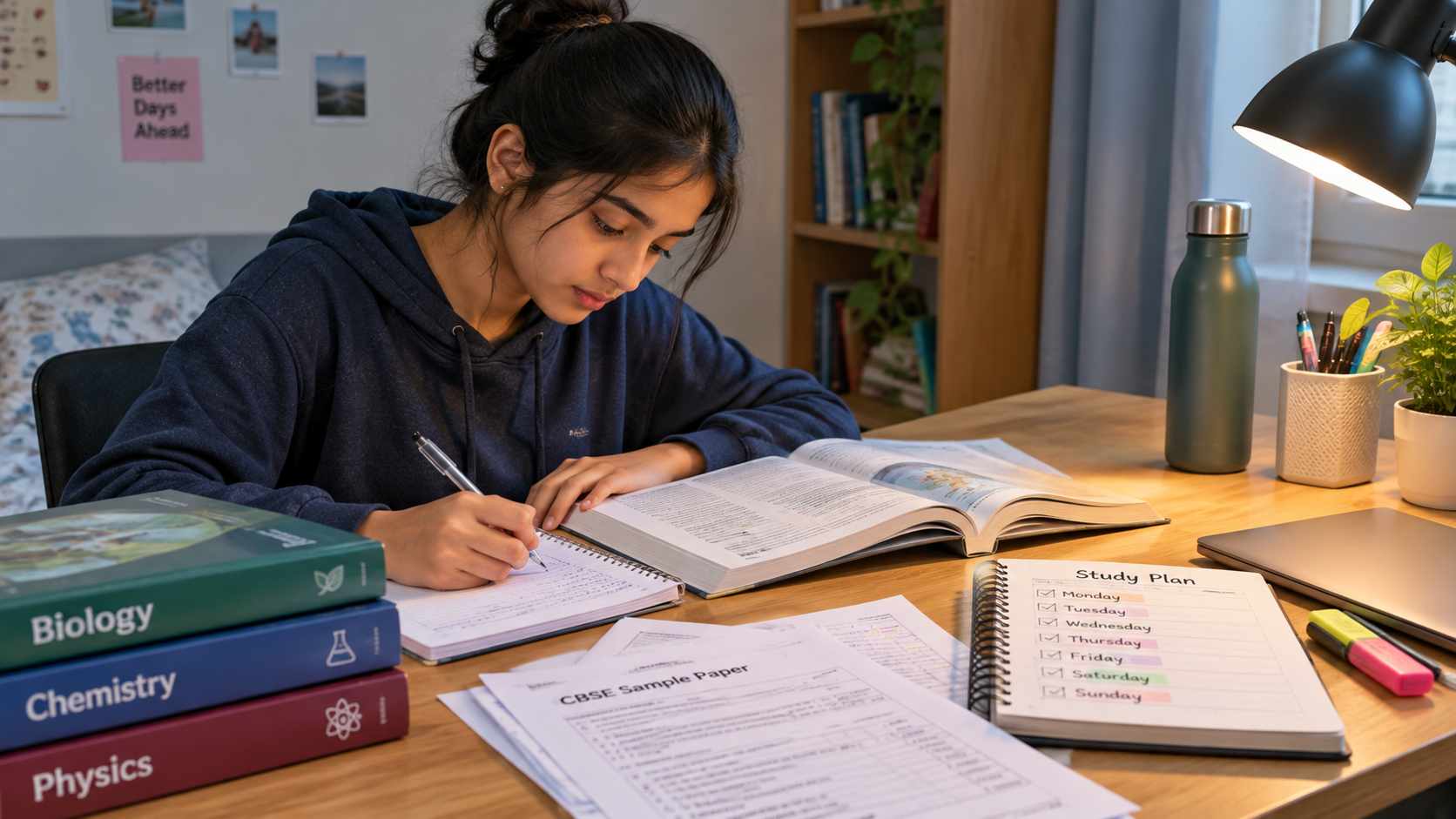
Build your timetable around school, coaching, travel, meals, family responsibilities, and sleep. Give each study block a clear task, such as revising one topic, answering questions, or checking mistakes. Avoid filling every minute because difficult chapters often take longer than expected. Set a few important goals each day and leave some buffer time. If you miss a session, adjust the plan instead of treating the whole day as a failure.
3. Prioritize Chapters Without Ignoring Subjects
Choose what to study by considering the syllabus, teacher guidance, your understanding, and the time remaining. Begin with essential concepts that support other topics, then work on chapters where you need more practice. Do not spend all your time on one favourite subject while leaving others untouched. Make a weekly rotation so every subject receives attention. When time is limited, focus on learning the core ideas properly rather than rushing through pages without understanding.
4. Use Active Revision Instead of Only Rereading
Reading notes repeatedly can feel familiar without showing whether you can recall the information. After studying a section, close the book and explain the main idea in your own words. Write down formulas, definitions, dates, steps, or diagrams from memory where appropriate, then check what you missed. Turn headings into questions and answer them without looking. This reveals gaps and helps you decide what deserves another revision session.
5. Practise Questions and Learn From Errors
Use textbook exercises, class worksheets, and relevant exam-style questions to apply what you have learned. Try to answer before checking the solution. When you make a mistake, identify its cause: perhaps you misunderstood a concept, forgot a step, made a calculation error, or did not read the question carefully. Keep a short mistake list and revisit it regularly. Repeating corrected questions can help you check whether you understand the method.
6. Start Sample Papers at the Right Time
Sample papers can help you become familiar with question formats and practise managing your time. First make sure you have studied enough of the relevant material to learn from the paper. Attempt it under conditions that resemble the actual exam, following the instructions and time limit for that paper. Afterward, check your answers carefully. Do not only look at the score; identify which topics need revision, which questions took too long, and where your answers lacked detail.
7. Improve Answer Presentation and Time Management
Read each question carefully and note what it asks you to explain, compare, calculate, or describe. Organize longer answers so the main point is easy to follow. Show working steps for calculations when appropriate, label diagrams clearly, and check that you have answered every part of the question. During practice, notice how long different sections take. If you spend too long on one question, practise moving on and returning to it when possible.
8. Protect Focus, Breaks, and Sleep
A workable preparation plan includes breaks and rest. Put your phone away during focused sessions, keep study materials ready, and choose a quiet place where possible. Work in blocks that suit your attention span and take short breaks between them. Avoid making all-night study a regular strategy; tiredness can make it harder to concentrate and work carefully. If you lose focus, restart with one small task instead of waiting for the perfect mood.
9. Review Your Progress Every Week
At the end of each week, check which chapters you completed, which topics remain unclear, and what your practice revealed. Keep the parts of your timetable that work and change the parts that repeatedly fail. If your task list is too large, reduce it to the most important next steps. A routine becomes more useful when you review it regularly rather than following it blindly. For more help building a repeatable routine, read our guide to how to study consistently.
10. A Simple Plan for the Final Revision Stage
As the exam approaches, organize revision around your remaining weak areas and the topics you need to revisit. Review concise notes, practise questions, and revisit your mistake list. Use sample papers with enough time afterward to learn from them. Avoid trying to learn every topic from scratch at the last minute if doing so means neglecting essential revision and rest. Prepare the items you need for exam day in advance and follow your school’s official instructions.
Frequently Asked Questions
How early should I start preparing for CBSE board exams?
Start as early as you can with regular chapter review, and increase focused revision as exams approach.
What should I study first?
Begin with syllabus priorities, essential concepts, and topics you find difficult, while keeping every subject in your weekly plan.
Are sample papers enough?
Sample papers are useful for practice, but they should support learning from your textbooks, class notes, and syllabus.
How many hours should I study daily?
There is no universal number; choose a realistic schedule that fits your responsibilities and allows focused work and rest.
What if I fall behind?
List the remaining work, prioritize the most important tasks, and restart with one manageable study block instead of trying to finish everything in one day.