Why Your Brain Feels Tired After Scrolling for Hours
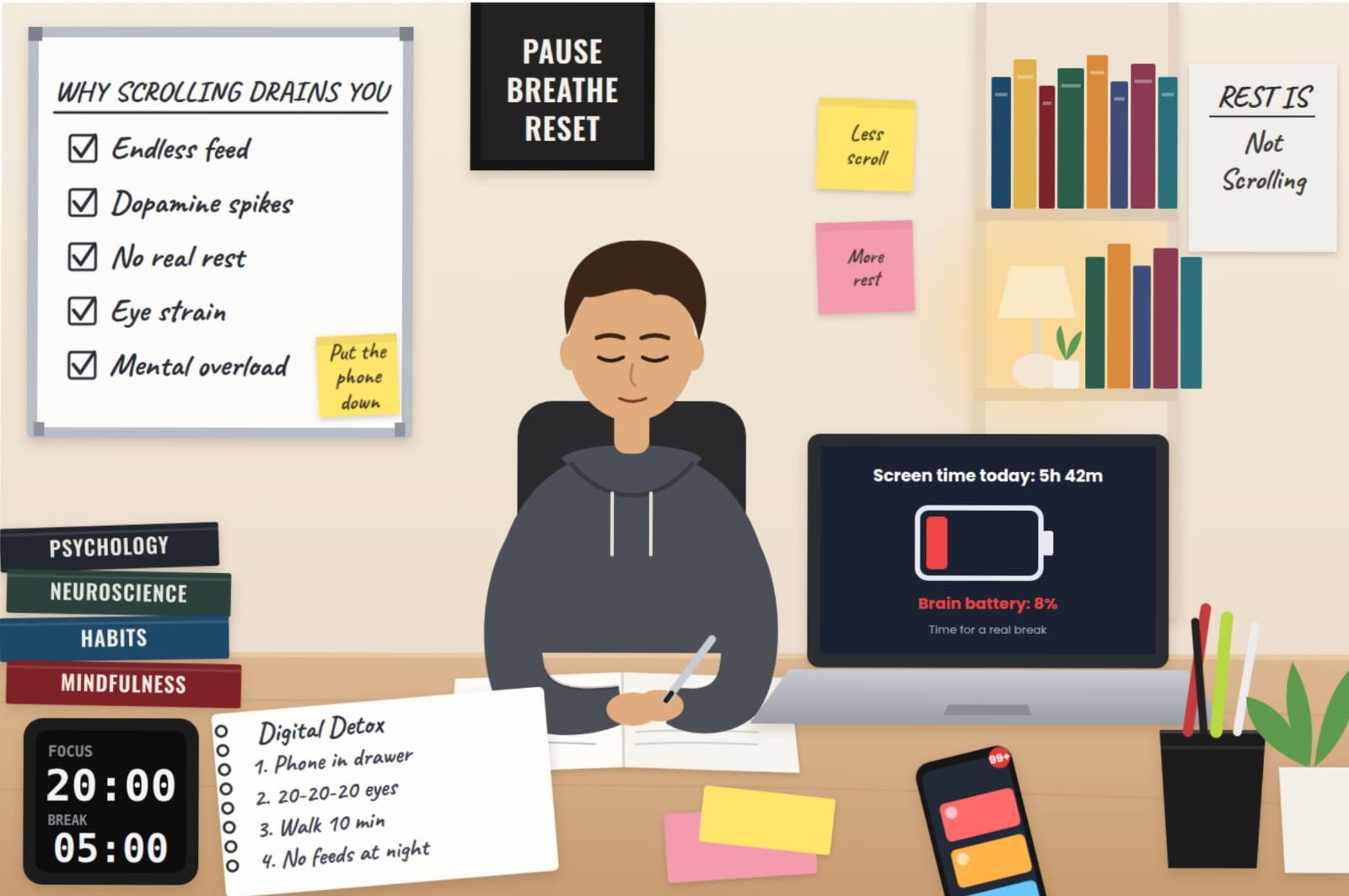
Endless scrolling can leave your brain feeling tired, distracted, and unproductive. Learn why scroll fatigue happens, how it affects your focus and mental energy, and discover practical strategies to reduce screen time, improve concentration, and build healthier study habits with Study Mates.
The Tiredness That Comes From Doing "Nothing"
You didn't lift anything heavy. You didn't run anywhere. You just sat there, thumb moving up the screen, one video or post after another. Then, an hour or three later, you feel drained. Not relaxed. Not entertained. Just tired, foggy, and a little irritable. This is called scroll fatigue. It's one of the most common forms of tiredness today, but few people understand why it happens. Let's break it down.
The Science Behind Brain Fatigue
Why Your Brain Feels Tired After Hours of Scrolling
Have you ever stared blankly at your screen, thumb still moving, and suddenly realized hours have passed? Your brain feels like mush. This happens to almost everyone. But what is actually going on inside your brain? The answer is simple: your brain is working hard to process a nonstop stream of new information.
Cognitive Overload and a Shrinking Attention Span
Our brains work best when we focus on one thing at a time. Social media does the opposite. Every few seconds, a new image, video, or headline pulls your attention away from the last one. Each switch makes your brain drop one thought and jump to another. Experts call this "attention residue." Do this hundreds of times, and your brain gets as tired as if it had been sprinting for hours.
Dopamine, Novelty, and the Reward Loop
Every new post might be interesting, funny, or surprising. Just the chance of that excites your brain's reward system, even before you see anything good. This is the same trick used in slot machines. It keeps you scrolling long after you've stopped really enjoying it. Your brain stays "switched on" the whole time, so it never gets to properly rest. That's why you end up feeling wired and worn out at the same time.
Decision Fatigue Hiding in Plain Sight
Scrolling might not feel like making decisions, but it is. Every post asks a tiny question: skip it, watch it, like it, read more? Your brain answers dozens of these small questions every minute. This adds up quietly. By the time you put your phone down, you've made hundreds of tiny choices — and you have nothing to show for the effort.
The Impact of Excessive Scrolling
Mental and Emotional Effects
Too much scrolling doesn't just make you foggy. It can also lower your mood. Seeing other people's "highlight reel" posts can lead to comparison and worry. And taking in so much information at once can leave you feeling cluttered instead of informed. Many people feel more restless and find it harder to focus after long scrolling sessions.
Physical Effects You Might Be Ignoring
The damage isn't just mental. Long screen time can cause eye strain, headaches, and poor sleep — especially if you scroll right before bed. The light from your screen and the exciting content both make it harder for your body to wind down. Hunching over your phone can also strain your neck and shoulders.
The Cost to Your Productivity
Perhaps the highest hidden cost is time. Hours that could go toward studying, working, or simply resting disappear into a feed instead. And the tiredness that follows makes it harder to focus on whatever you do next. This creates a cycle: scrolling makes you tired, and it also eats up the time you'd need to recover.
Read Also: How virtual study room improve focus and productivity
Why Cutting Back Matters More Than You Think
It's easy to treat scrolling as harmless background noise. But its effect on your attention, mood, and energy is real. Cutting back doesn't mean giving up technology completely. It means protecting your brain's ability to focus deeply — something that gets harder every time it's interrupted by quick, low-effort content.
Getting Your Mental Energy Back
Every hour you don't spend scrolling is an hour your brain can use for something better: learning a new skill, finishing important work, or simply resting properly. Breaking the habit isn't only about willpower. It's about building an environment where scrolling isn't the easiest thing to do.
Study Mates: A Simple Way to Break the Scrolling Habit
How Study Mates Helps You Stop Endless Scrolling
Everything about your phone is designed to grab and hold your attention. That makes cutting back hard to do alone. This is where Study Mates helps. It gives you a structured, supportive space built to help you focus and spend less time on unproductive scrolling.
A Structured Space With Built-in Accountability
Study Mates gives you a space made for one purpose: learning and productive work, not passive scrolling. Sitting down for a Study Mates session tells your brain it's time to focus. This is the opposite of a scrolling session, which has no clear start or end. Being around other people who are focused also helps. It's much harder to start scrolling when everyone around you is clearly working.
Replacing a Bad Habit With a Better One
The best way to break a habit is to replace it, not just remove it. Study Mates gives your brain something better to do than scroll. It still gives you a sense of progress and reward, but through real learning and real results — not an endless feed that leaves you feeling empty.
Read Also: Embrace the Digital Classroom: Your Guide to Online Study Success
Frequently Asked Questions
1. Why does scrolling make me tired even though I'm just sitting still?
Scrolling isn't as passive as it looks. Your brain keeps processing new information, making quick decisions, and reacting to small bursts of dopamine from new content. All of this adds up, so you feel tired even though your body hasn't moved much.
2. Is it the amount of time I scroll, or the type of content, that causes fatigue?
Both matter. Longer sessions cause more mental overload and decision fatigue. But fast, highly exciting content — like short videos — tires your brain out faster, because it forces your attention to switch more often in less time.
3. How can Study Mates help if this habit feels hard to break?
Study Mates changes your environment and routine instead of relying only on willpower. A focused space, with other people working around you, makes it naturally harder to start scrolling and easier to stay on task.
Why You Should Join Study Mates Today

Online study mates:- Buy subscription now
If scroll fatigue has become part of your everyday life, it's worth asking what your time could look like instead. Study Mates isn't just another productivity tool. It's a community and a space built to pull you away from passive scrolling and into focused, meaningful work. You get a distraction-free space, quiet accountability from people working alongside you, and a routine that makes focus the easy choice instead of the hard one.
Your attention is one of your most valuable resources. Every hour lost to mindless scrolling is an hour you won't get back. Joining Study Mates gives you a simple, lasting way to protect that attention. Instead of ending your day tired with nothing to show for it, you'll end it having actually moved forward. Make the switch today, and give your brain something better to do than scroll.