SAT Study Plan: How to Prepare for the SAT
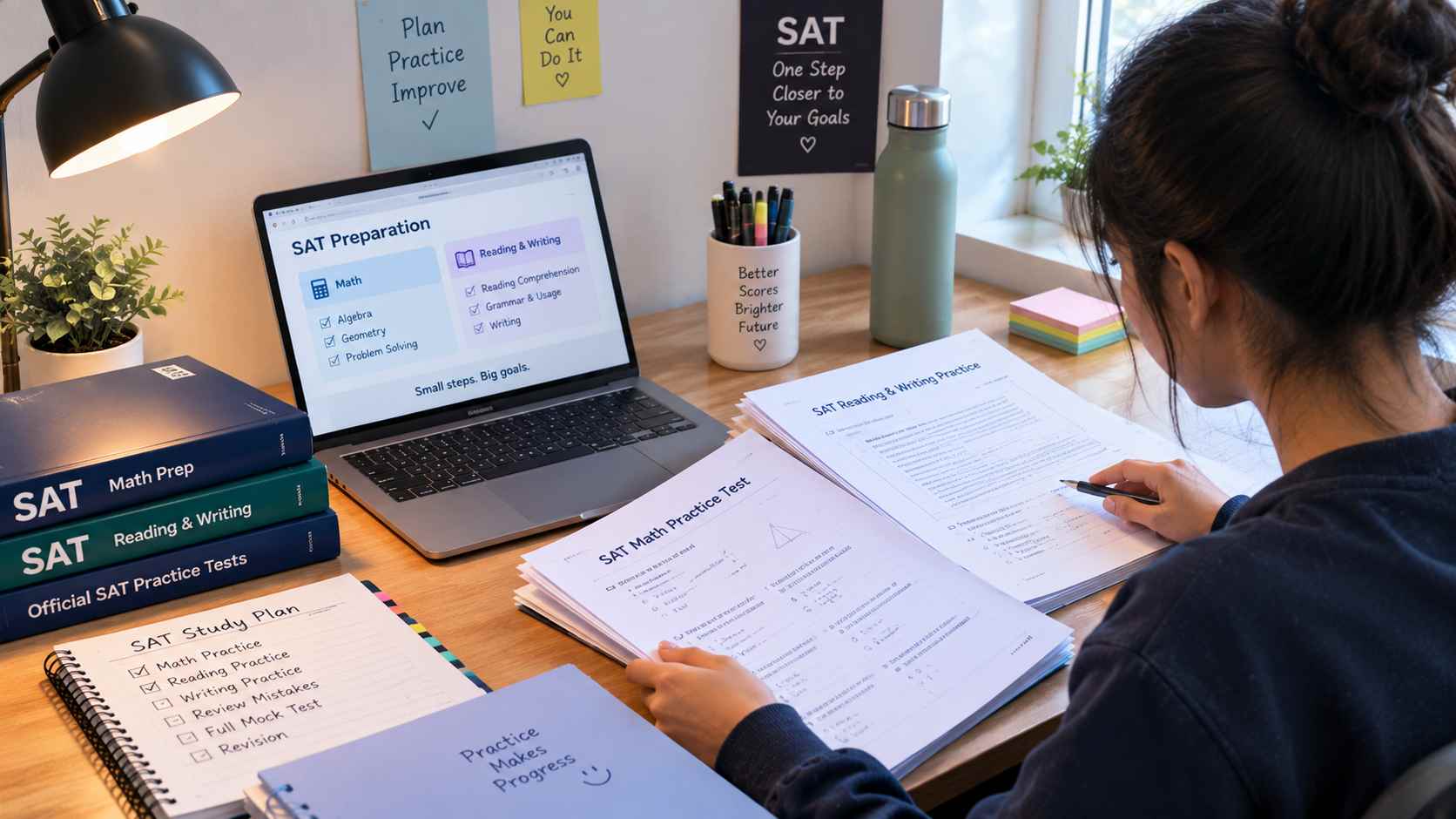
Build a practical SAT study plan with a starting diagnostic, weekly targets, Reading and Writing practice, Math review, timed tests, and a routine you can maintain.
Preparing for the SAT can feel confusing when you are balancing schoolwork, activities, and other responsibilities. You might be unsure which topics to study first, how often to take practice tests, or how to fit preparation into a busy week. A useful SAT study plan gives you a clear starting point and helps you use each study session for a specific purpose. You do not need to study for hours every day without a break. You need a realistic routine that helps you identify gaps, practise deliberately, and review what you learn.
1. Start With a Diagnostic Practice Test
Before building your schedule, complete an official or otherwise reliable SAT practice test under timed conditions, following its instructions. Treat the result as a starting point rather than a final judgment of your ability. Review which question types felt comfortable, which took too long, and which you answered incorrectly. Keep a record of your results by skill area so you can choose priorities. If a full test feels too much at first, begin with a shorter diagnostic set and schedule a full practice test soon afterward.
2. Set a Goal and Choose a Realistic Timeline
Decide what you want your preparation to achieve and how much time you have before your planned test date. Your goal should guide your priorities, but it should not force you into an exhausting schedule. Count the study blocks you can realistically complete each week after school, homework, sleep, and other commitments. If you have several weeks or months, spread learning and practice across them. If time is short, prioritize the areas where practice is most likely to help rather than trying to relearn everything at once.
3. Build a Weekly SAT Study Schedule
A weekly plan is easier to follow when each session has a defined task. You might assign some sessions to Math concepts, others to Reading and Writing skills, and one session to reviewing mistakes or completing timed practice. Choose the number and length of sessions based on your availability. Make room for revision and allow a buffer for school deadlines or difficult topics. At the end of the week, check what you completed and adjust the next plan.
4. Strengthen SAT Math Step by Step
Use your diagnostic results and practice questions to identify Math skills that need attention. Review the underlying concept before attempting a large set of questions. Work through examples carefully, then solve similar questions without looking at the solution. When you make an error, identify whether it came from a concept gap, an incorrect setup, a calculation slip, or misreading the question. Practise explaining why a method works instead of memorizing steps without understanding them.
5. Improve Reading and Writing Skills
Reading and Writing practice involves understanding passages, interpreting evidence, recognizing relationships between ideas, and applying grammar and usage rules. Read each question carefully and identify exactly what it asks. For questions about evidence or meaning, return to the relevant text rather than relying only on your first impression. For grammar and editing questions, review the rule behind the correct answer. Keep notes on repeated errors, such as punctuation, sentence boundaries, transitions, or interpreting a passage.
6. Keep a Mistake Log and Review It
A mistake log turns practice into a learning process. For each question you miss or guess, record the skill involved, why your answer was wrong, and what you will do differently next time. Keep the explanation brief enough that you will actually review it. Reattempt selected questions after a gap without looking at the original solution. If the same mistake appears repeatedly, add a short targeted practice session to the next week’s plan.
7. Use Timed Practice and Full Practice Tests
Untimed practice can help you understand a skill, while timed practice helps you apply it under exam conditions. Build up gradually: learn a concept, practise related questions, then complete a timed set. Use full practice tests at planned intervals rather than taking them so frequently that you have no time to review them. After each test, examine incorrect answers, guessed answers, and questions that consumed too much time. Turn those findings into specific tasks for the following week.
8. Protect Focus and Make the Routine Sustainable
Choose a study location where you can work with fewer interruptions. Put your phone away, prepare the materials you need, and begin with a clear task. Use study blocks that match your attention span and take breaks between them. Avoid comparing your daily hours with another student's schedule; your responsibilities and starting point may be different. If it is difficult to begin studying alone, an accountability routine or an online study room may help you start and stay on task.
9. Review Progress Every Week
At the end of each week, look at the work you completed and the errors that still appear. Notice whether you are improving in a skill, becoming more accurate, or managing time more comfortably. If a task repeatedly remains unfinished, reduce its size or move it to a more realistic time. Keep practising skills you have improved so they do not become rusty. Your plan should respond to evidence from your practice, not just to how confident or worried you feel on a particular day.
10. Adjust Your Plan as Test Day Approaches
As your test date gets closer, focus on reviewing common mistakes, strengthening remaining weak areas, and practising with the current test format and official instructions. Avoid filling the final days with nonstop testing. Leave time to review what you learn from each practice session and protect your sleep and normal routine. Confirm test-day requirements through the official SAT website or your test registration materials. A calm, prepared routine is more useful than a last-minute schedule that leaves you exhausted.
Frequently Asked Questions
How long should I study for the SAT? It depends on your starting point, target, and available time, so begin with a diagnostic and build a realistic weekly schedule.
Should I study Math and Reading and Writing every day? You can rotate subjects across the week as long as both receive regular attention and your weak areas get targeted practice.
How often should I take a full practice test? Use full tests at planned intervals and leave enough time to review mistakes before taking another one.
What should I do if my practice score stops improving? Review your mistake log, identify recurring skill gaps, and change your practice rather than simply adding more hours.
Where should I check current SAT details? Use the official SAT website and your registration materials for current format, policies, and test-day instructions.