How to Study at Home: A Simple Guide for Students
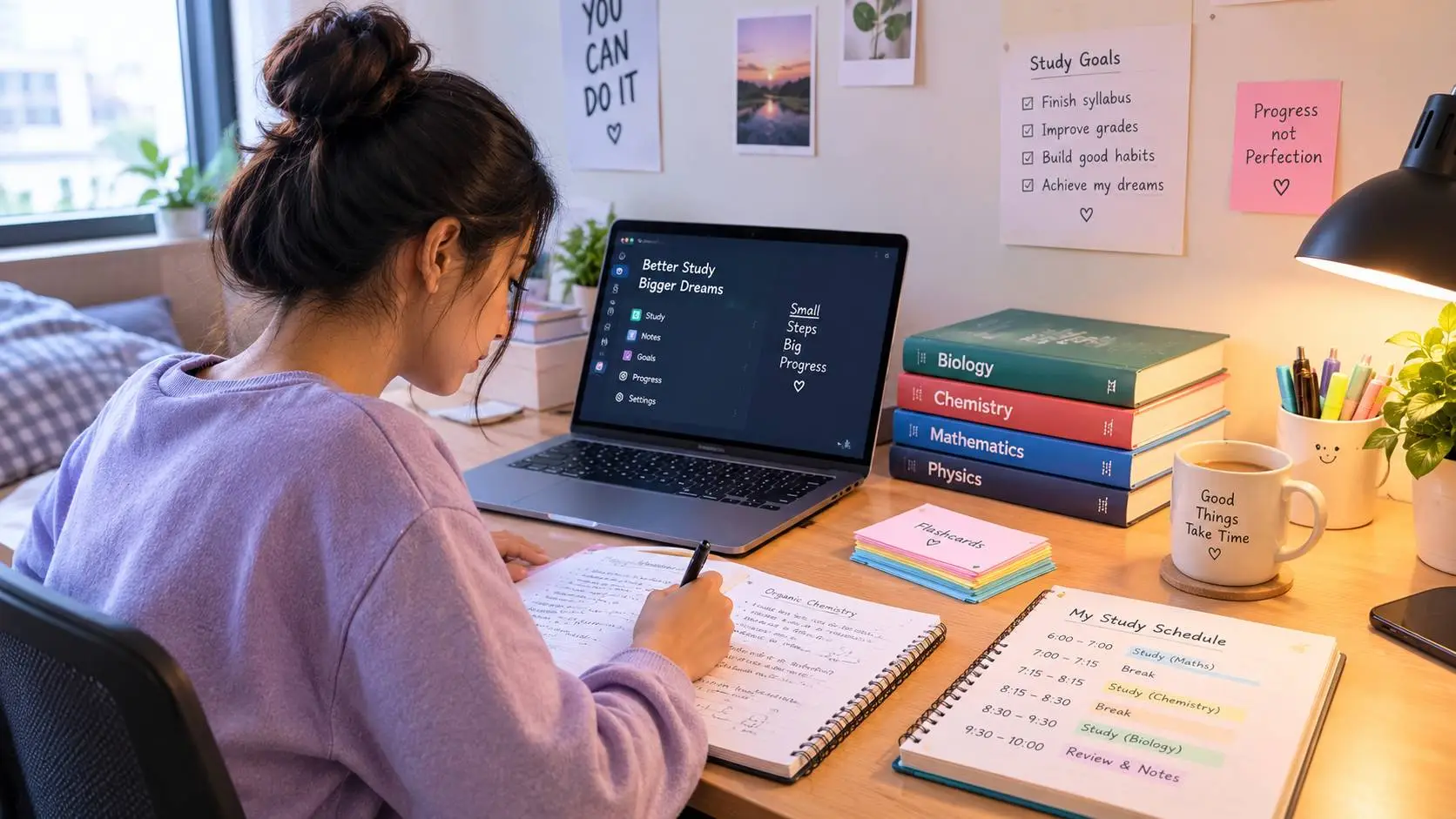
Learn how to study at home with a simple routine, fewer distractions, a better study space, clear goals, and practical ways to stay consistent.
Studying at home can be convenient, but it can also be difficult to stay focused. Your bed, phone, television, family members, games, social media, and household tasks can all compete with your attention.
The good news is that you do not need a perfect home or an expensive study setup to study effectively. You need a clear routine, a suitable place to work, and a system that makes it easier to begin.
When you know what you are studying, when you are studying, and what you want to finish, studying at home becomes much more manageable. Small changes to your environment can also make it easier to stay focused.
This guide explains how to study at home, how to create a productive study space, how to reduce distractions, and how to build a routine you can actually follow.
Choose One Regular Place to Study
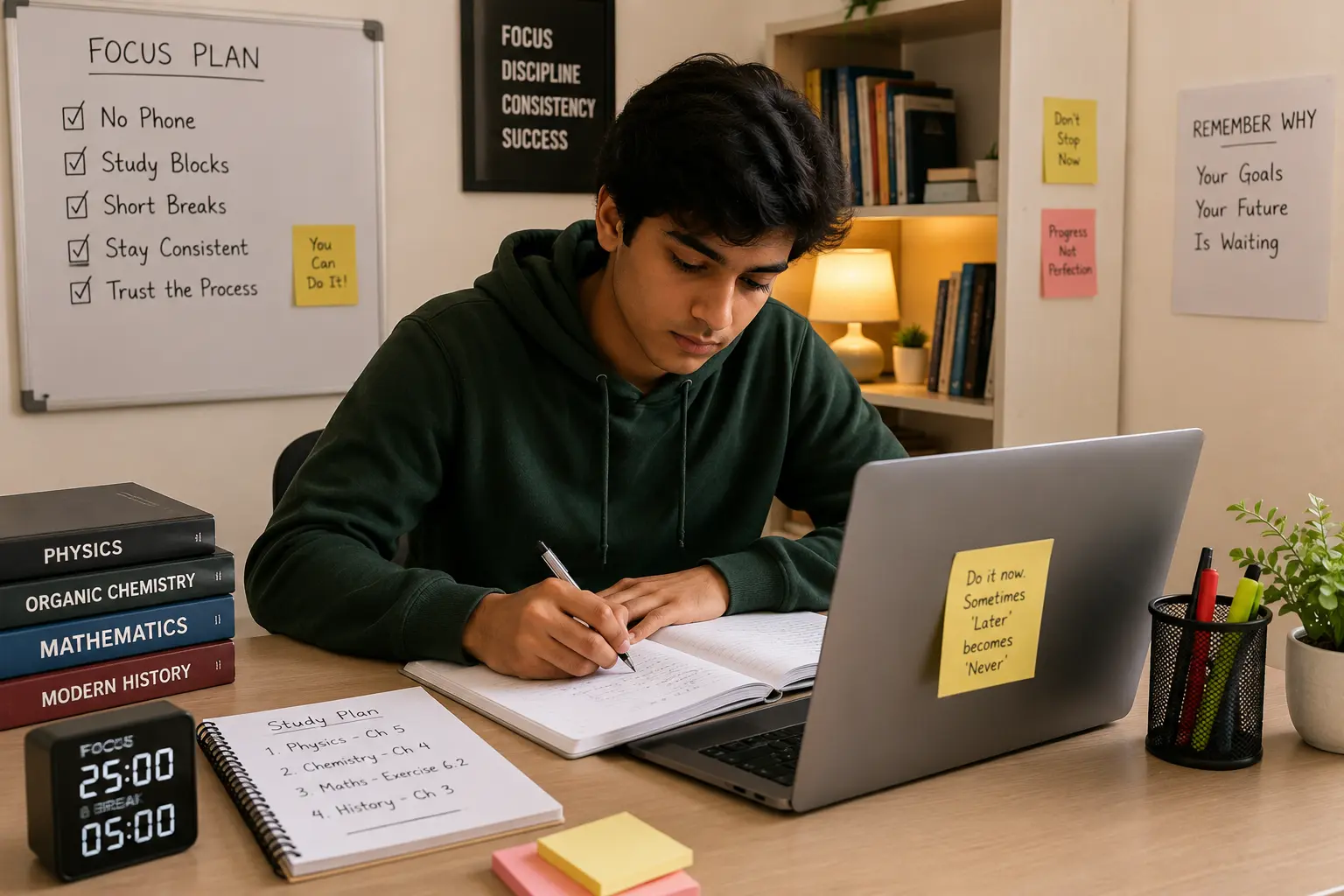
If possible, choose one place in your home that you mainly use for studying. It does not need to be a separate room. A desk, dining table, or quiet corner can work.
Using the same place regularly can make your study routine easier to follow. When you sit there, your main purpose should be studying rather than watching videos, playing games, or scrolling through social media.
Keep the space simple. You only need the materials required for your current task. A crowded desk can make it harder to know where to begin.
Keep Your Study Space Ready
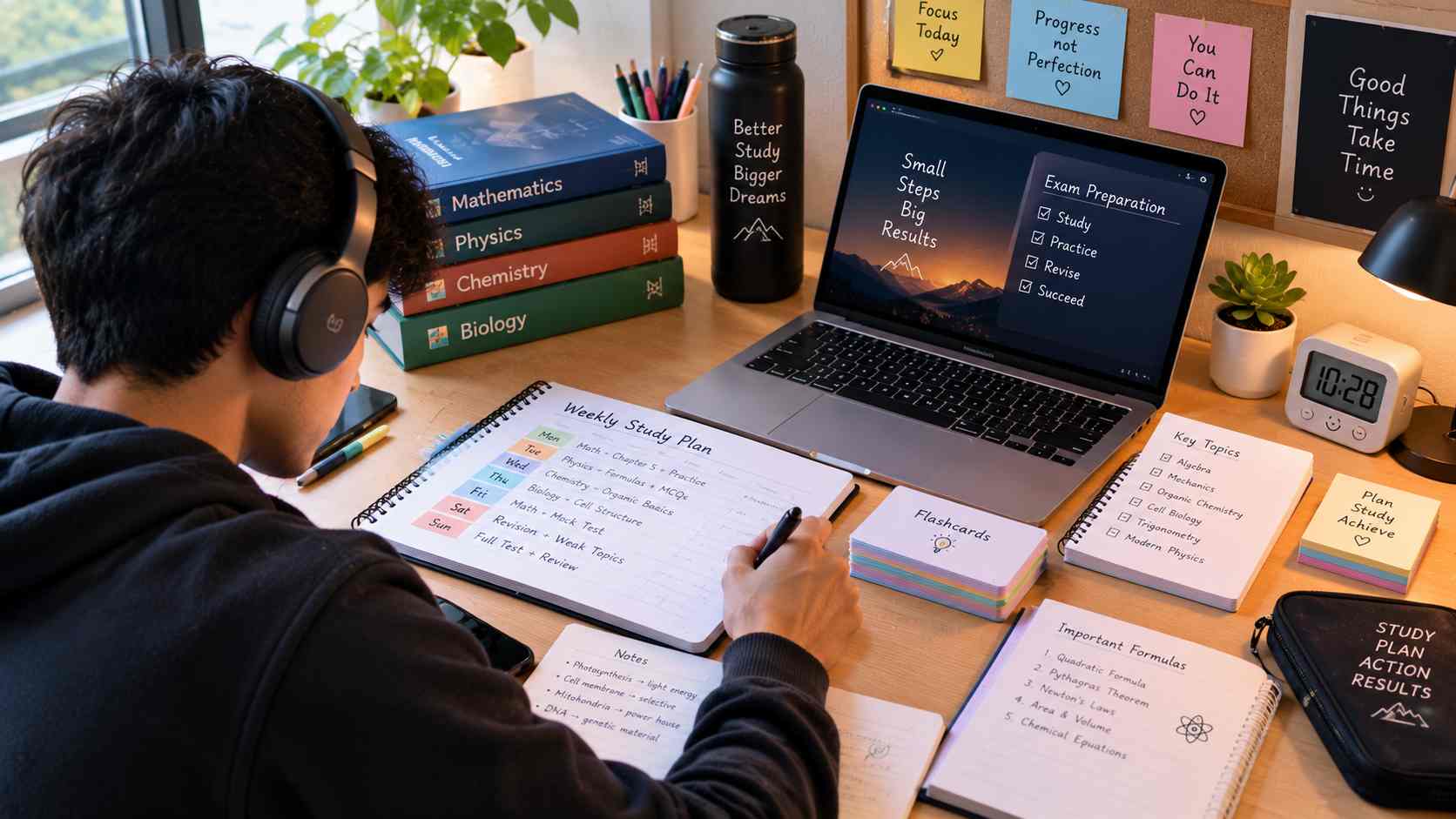
A good study space should reduce unnecessary decisions. Before starting, prepare the things you will need for the session.
- Keep your textbook or digital material nearby.
- Keep a notebook and pens ready.
- Have water available so you do not need to leave repeatedly.
- Make sure your laptop or tablet has enough battery.
- Remove unrelated items from your immediate workspace.
The goal is simple: when it is time to study, you should be able to sit down and start instead of spending ten minutes preparing.
Make Your Phone Less Distracting
Your phone can make studying at home much harder. Even when you do not actively use it, notifications and the temptation to check messages can interrupt your attention.
- Put your phone away from your study desk.
- Turn off unnecessary notifications during study sessions.
- Use focus or do-not-disturb settings when appropriate.
- Decide when you will check messages instead of checking them continuously.
You do not have to remove your phone permanently. The goal is to create a clear boundary between study time and entertainment time.
If scrolling regularly takes over your study breaks, you may also find it useful to read why your brain feels tired after scrolling for hours.
Create a Simple Study Schedule
Studying whenever you “feel like it” can make your routine inconsistent. Instead, choose realistic times when you usually have enough energy to work.
Your schedule does not need to fill every hour of the day. Start with the subjects or tasks that matter most and create a few focused study blocks.
- Choose the subject you will study before the session begins.
- Give each study block one clear goal.
- Include short breaks between focused sessions.
- Leave some flexible time for unfinished work.
- Review your schedule regularly and adjust it when necessary.
A useful schedule should fit your real life. A complicated timetable that you cannot follow is less useful than a simple routine that you repeat consistently.
Decide What You Will Finish Before You Start
One common problem with studying at home is starting without a clear goal. You sit down with a book and think, “I need to study.” After a few minutes, you are not sure what to do next.
Instead, define the outcome before you begin.
- Read and summarize one chapter section.
- Complete ten mathematics questions.
- Review twenty flashcards.
- Learn one new concept and explain it in your own words.
- Complete one section of an assignment.
A clear goal gives your study session a beginning and an end. It also makes it easier to recognize your progress.
Use Focused Study Blocks
You do not have to study continuously for several hours to make progress. Long sessions can become difficult when your attention starts to decline.
Instead, divide your study time into focused blocks. During each block, work on one task and avoid switching between unrelated activities.
When the block ends, take a short break. Move away from your desk, stretch, drink water, or simply rest your eyes. Then return when your break is finished.
The structure should feel realistic for you. The purpose is to create repeated periods of focused work rather than forcing yourself to sit at your desk for an undefined amount of time.
Tell People at Home When You Are Studying
If you live with family members or roommates, interruptions can make studying difficult. Let the people around you know when you are studying and when you will be available again.
You can use a simple message such as “I am studying for the next hour, so I will talk to you afterward.” A visible sign on your desk or door can also help if that works in your home.
You may not be able to eliminate every interruption. The goal is to reduce unnecessary interruptions and make your study time easier to protect.
Do Not Study From Your Bed If You Can Avoid It
Your bed is designed for rest, so it can be difficult to maintain focus there. You may feel sleepy, become too comfortable, or start using your phone.
If you have access to a desk or table, use that space for studying. If you do not have one, create a consistent study area that is separate from where you normally sleep.
The important thing is to create a clear mental difference between your study environment and your rest environment.
Use Active Study Methods
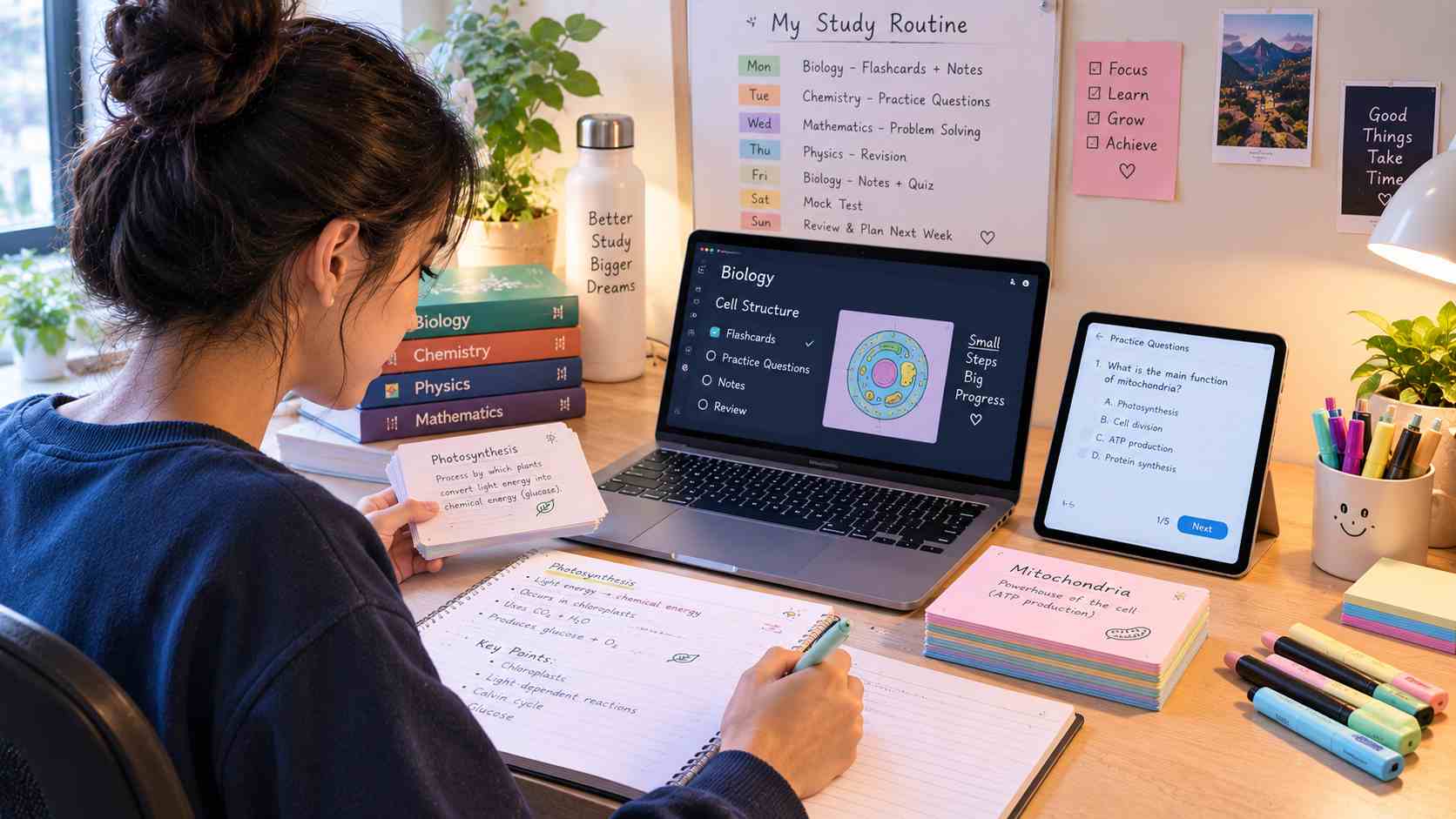
Studying at home does not mean simply reading the same page repeatedly. Use methods that require you to interact with the material.
- Test yourself after learning a concept.
- Write questions and answer them without looking at your notes.
- Use flashcards to review important information.
- Explain a difficult topic in your own words.
- Solve practice questions instead of only reading examples.
For subjects that require regular review, you can also organize your study using spaced repetition. The important idea is to make your study sessions active rather than spending the entire session passively reading.
Take Breaks Without Losing Your Session
Breaks are useful, but the type of break matters. If you open social media during a short break and continue scrolling, returning to your study session can become much harder.
Choose breaks that help you reset without creating another long activity. You can stand up, walk around, stretch, drink water, or simply sit away from your screen.
Before taking the break, decide when you will return. This makes the break part of the study routine rather than an escape from it.
Study With Other People From Home
Studying at home does not mean you have to study completely alone. Some students find it easier to stay accountable when other people are studying around them.
This can be especially useful when you keep delaying the start of your session. Seeing other people work can provide a simple reminder to stay with your own task.
This approach is often called body doubling. You can learn more about body doubling for students and how studying alongside others can support a more consistent routine.
If you prefer a dedicated online environment, join a StudyMates study room and study alongside other people while working on your own subjects.
Handle Days When You Cannot Focus
Even with a good setup, there will be days when focusing feels difficult. Do not assume that one bad session means your entire study routine has failed.
Start by reducing the task. Instead of planning a long session, choose one small goal and work on it for a short period.
If distractions are the main problem, change your environment. Put your phone away, close unrelated tabs, and remove anything from your desk that is not needed for the current task.
You can also read what to do when you cannot focus on studying for more practical ideas.
End Each Study Session With a Quick Review
Before you finish studying, spend a few minutes reviewing what you completed. Write down the topics you covered and note what you need to do next.
This gives your next session a clear starting point. You will not have to sit down tomorrow and decide everything from the beginning.
You can also write one sentence about what you learned. This creates a simple record of your progress and can make your study routine feel more manageable.
The best study setup is not the most expensive one; it is the one that makes it easier for you to start and continue.
Build a Routine You Can Actually Follow
The most important part of studying at home is consistency. You do not need to create a perfect schedule from the first day.
Start with a simple routine. Choose your study location, decide when you will begin, prepare your materials, select one clear task, and work for a realistic period.
After a few sessions, look at what worked and what caused problems. Adjust your study time, environment, or task size instead of abandoning the entire routine.
Remember that studying at home is a skill you can improve. The more predictable your routine becomes, the less effort you may need to spend deciding when and how to begin.
Frequently Asked Questions
How can I study effectively at home?
Create a dedicated study area, remove major distractions, choose clear tasks, and use focused study blocks with breaks. A simple routine that you can repeat is more useful than an overly complicated schedule.
How can I stop getting distracted while studying at home?
Start by identifying your biggest distraction and changing your environment around it. Put your phone away, close unrelated tabs, and keep only the materials needed for your current task nearby.
Is it better to study at a desk or on the bed?
A desk or table is usually a better choice because it creates a clearer separation between studying and resting. If possible, keep your bed primarily for sleep and relaxation.
How many hours should I study at home?
There is no single number that works for every student. Choose study blocks that fit your responsibilities, energy, and academic goals, then build consistency over time.
Can I study effectively without a separate study room?
Yes. You can use a quiet corner, table, or other consistent area as your study space. The important part is making the space predictable, organized, and suitable for focused work.