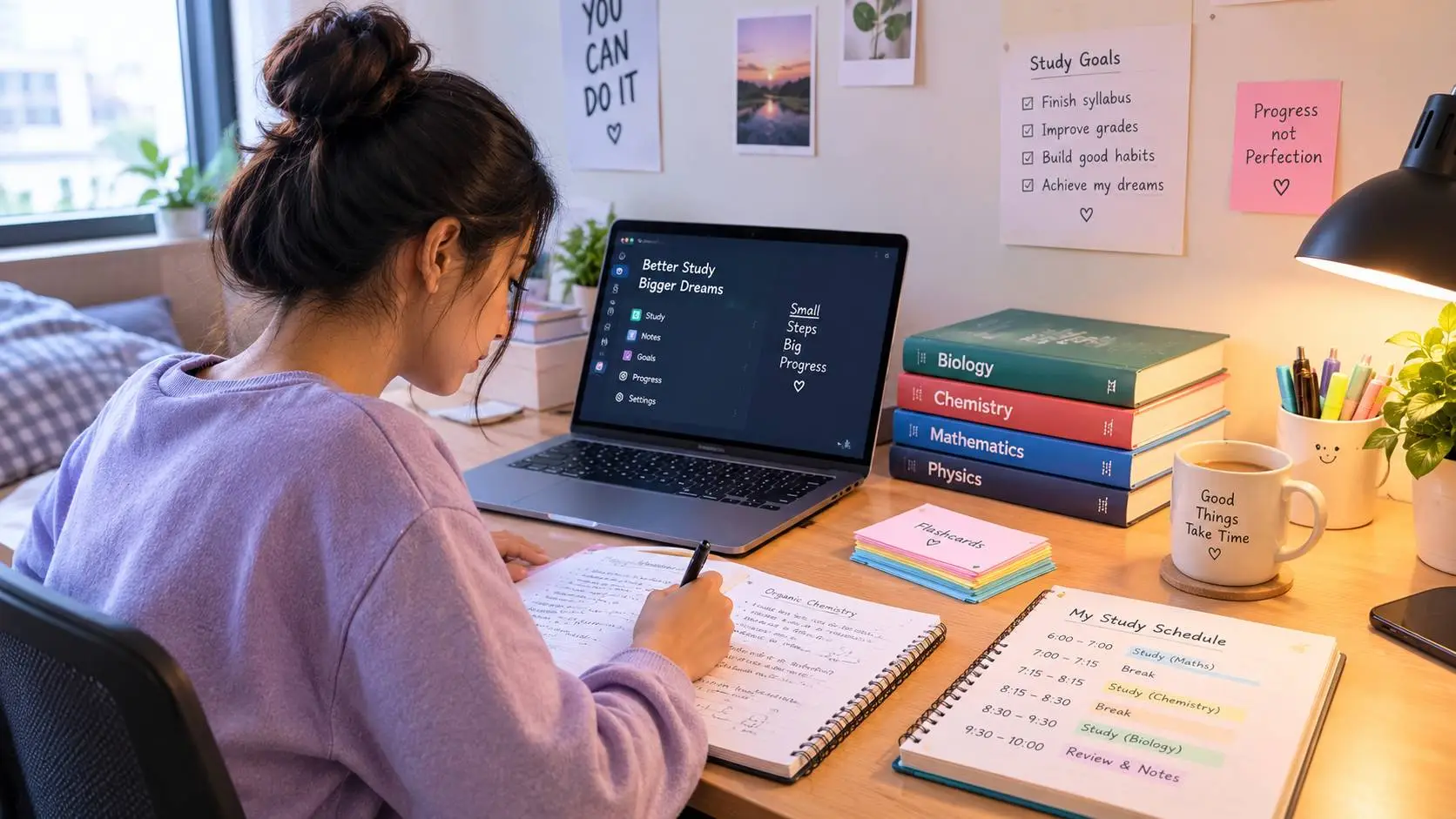
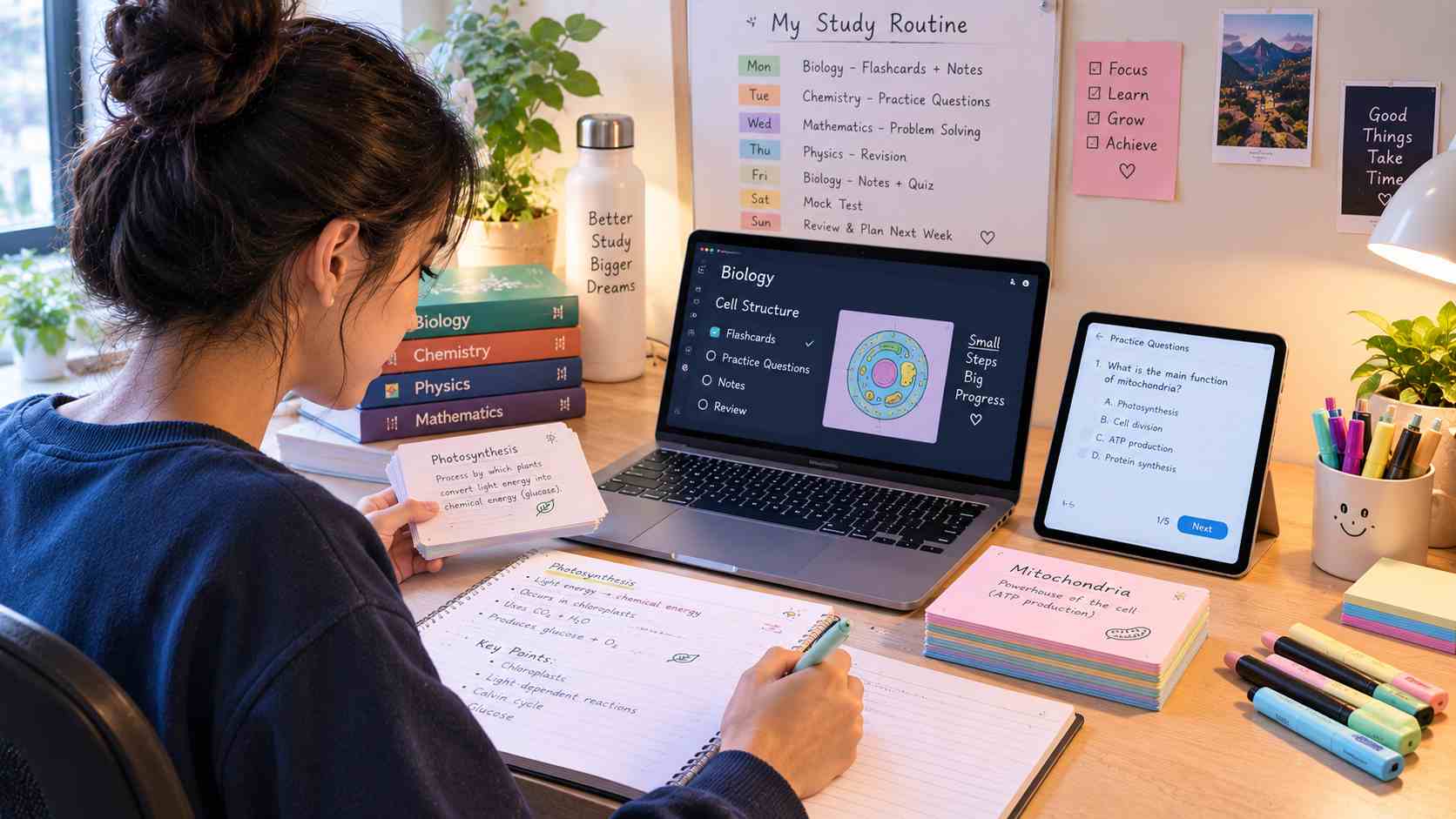
How to Stop Procrastinating While Studying
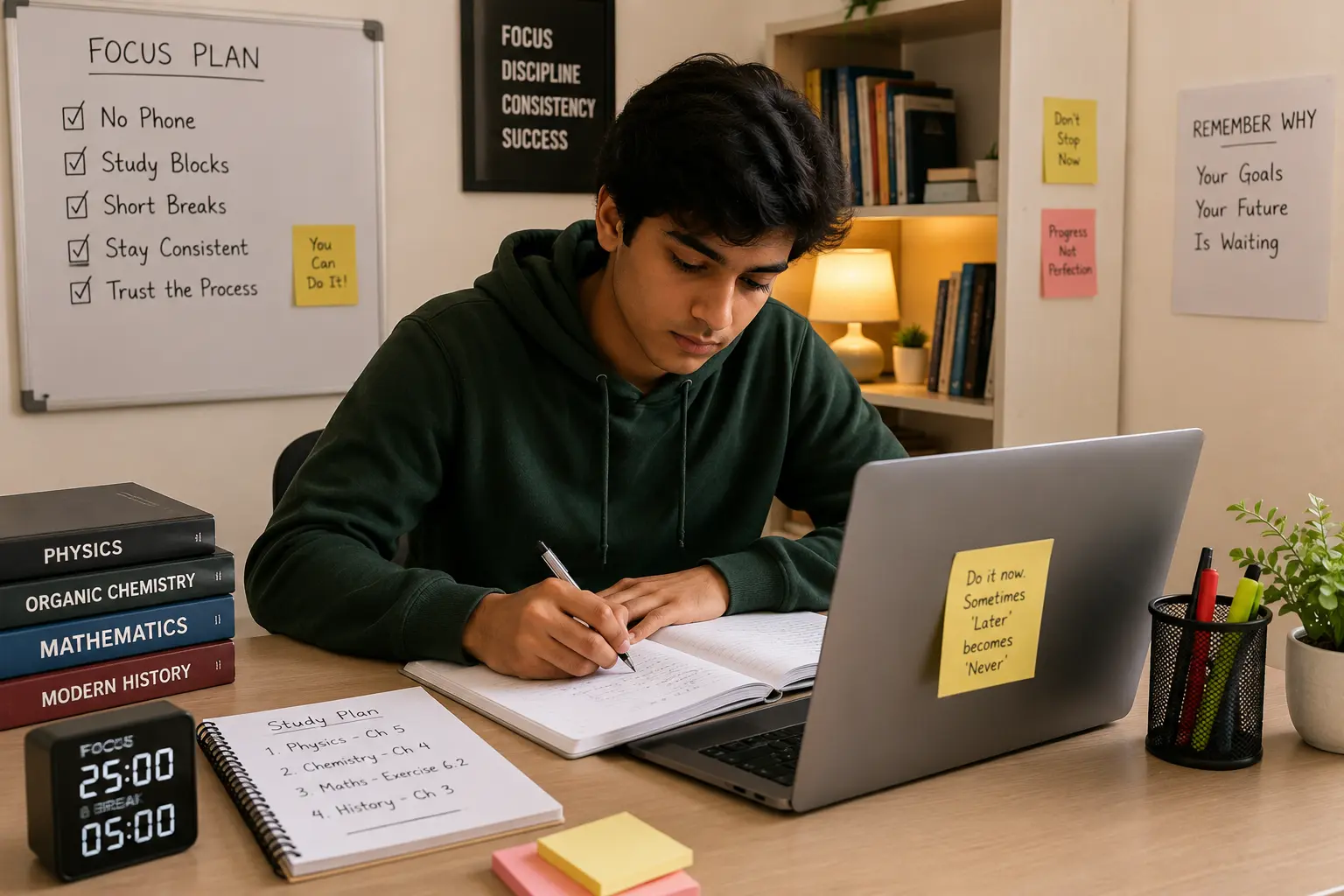
Learn how to stop procrastinating while studying with simple ways to start faster, remove distractions, and stay consistent.
You know you need to study, but you keep delaying it. You check your phone, open another tab, tidy your desk, watch a video, or tell yourself that you will start after a short break. Then more time passes, and the work is still waiting.
Procrastination is not always about being lazy. Often, the task feels difficult, boring, unclear, or too large to start. When your brain sees a study session as a big effort, avoiding it can feel easier than beginning.
The good news is that you do not need to wait until you feel motivated. You can make starting easier. A few simple changes to your environment, study plan, and daily routine can help you move from thinking about studying to actually doing it.
This guide explains how to stop procrastinating while studying. You will learn practical ways to start small, control distractions, create accountability, and make study sessions easier to repeat.
Why You Procrastinate Before Studying
Before fixing procrastination, it helps to understand what happens when you avoid a task. You may have a clear goal, such as finishing a chapter or preparing for an exam, but the goal can feel too far away. Your brain then looks for something easier and more immediately rewarding.
Sometimes the problem is not the amount of work. The problem is that you do not know exactly what to do first. “I need to study chemistry” is a vague task. “Read the next section and write five key points” gives you a clear starting point.
Fear can also create delay. You may worry that you will not understand the topic, perform badly, or finish everything you planned. Avoiding the task gives temporary relief, but the unfinished work remains.
If your phone and social media are nearby, starting becomes even harder. You have an easy source of entertainment competing with a task that requires effort. Learning why your brain feels tired after scrolling can also help you understand why long periods of digital distraction can make it harder to settle into focused work.
Make the First Step Smaller
The easiest way to fight procrastination is often to reduce the difficulty of starting. Do not tell yourself that you must finish an entire chapter. Give yourself one small action.
Choose a tiny starting task
- Open the book to the exact page you need to study.
- Write down the first question you need to answer.
- Read one short section and identify its main idea.
- Solve the first question without worrying about the rest of the exercise.
- Write a short list of the topics you want to cover in the session.
A small action removes the pressure of completing everything immediately. Once you begin, continuing often feels easier because you are no longer fighting the resistance of getting started.
Do not wait to feel motivated; make the first step easy enough that you can start anyway.
Turn “Study” Into a Clear Task
“Study for my exam” is a goal, not a study plan. It does not tell you what to do when you sit down. A clear task gives your session a direction.
Before starting, decide what you want to accomplish. Your goal should be specific enough that you can recognize when the task is complete.
- Instead of saying “study biology,” decide to review one topic and make a short summary.
- Instead of saying “practice maths,” decide to solve a selected set of problems and check your mistakes.
- Instead of saying “revise history,” decide to review one chapter and recall its important events.
- Instead of saying “prepare for the exam,” decide which subject and topic you will work on first.
Breaking a large goal into smaller actions makes your study session easier to begin. It also helps you avoid wasting time deciding what to do after you sit down.
Remove Distractions Before You Start
If you regularly procrastinate with your phone, do not depend only on willpower. Change the environment before your study session begins.
Put your phone somewhere you cannot easily reach it. Close unrelated browser tabs. Keep only the books, notes, and tools needed for the current task on your desk.
Think about the distractions that usually interrupt you. If you already know that notifications make you check your phone, turn them off before studying. If a particular website repeatedly pulls you away from your work, close it before you begin.
Create a study-ready environment
- Keep your study materials ready before the session starts.
- Remove unnecessary apps, tabs, and notifications from your immediate workspace.
- Keep entertainment devices away from your main study area when possible.
- Use the same study location when it helps you associate that place with focused work.
- Keep water and other simple necessities nearby so you do not need repeated interruptions.
Your goal is not to create a perfect workspace. Your goal is to make studying easier to start and distractions slightly harder to reach.
Use a Simple Study Session Structure
Long, undefined study sessions can make procrastination worse. Instead of sitting down and thinking that you will study “for a long time,” create a simple structure for the session.
Start by choosing one task. Then work on that task for a focused period. Take a planned break when you need it, and return to the next task instead of letting the break become an open-ended scrolling session.
You can also use a method that divides study into focused work and breaks. If you want to explore another structured approach, read about the 2357 study method and see whether its structure fits your routine.
The important part is consistency. You do not need to use the same method every day. You need a structure that makes the next action obvious.
Use Accountability to Make Starting Easier
Studying alone can make it easy to postpone work because nobody knows whether you started. You can tell yourself that you will begin later without anyone noticing. Adding accountability changes that situation.
Try telling someone what you plan to study before starting. You can also study alongside another person who is working on their own task. The other person does not need to teach you or talk to you. Their presence can simply create a sense that you are expected to work.
This is closely related to body doubling. If the idea is new to you, learn how body doubling can support better study habits.
For students who struggle to start alone, joining a quiet virtual study room can provide a simple accountability routine. You can join a StudyMates study room, choose your task, and work alongside others who are also focused on their own work.
Stop Waiting for the Perfect Mood
Many people delay studying because they are waiting to feel ready. They may think they need motivation, energy, confidence, or the perfect amount of free time before starting.
That approach creates a problem because your mood changes throughout the day. If studying only happens when you feel motivated, your routine becomes unpredictable.
Instead, separate starting from motivation. You can feel tired and still complete a small task. You can feel unmotivated and still open your notes. You can feel nervous about an exam and still solve the first question.
Do not ask, “Do I feel like studying?” Ask, “What is the smallest useful thing I can do now?” That question gives you an action instead of another reason to wait.
Build a Routine You Can Repeat
Stopping procrastination is easier when studying becomes part of your normal routine. You should not have to make a completely new decision every time you need to work.
Choose a regular study window that fits your schedule. Prepare your materials before that time. Decide your first task in advance. When the study period arrives, begin with that task instead of spending time planning from scratch.
Keep your routine realistic
A routine that is too demanding is difficult to maintain. If you plan an exhausting schedule every day, missing part of it can make you feel that the entire routine has failed.
Give yourself a clear minimum action. For example, your goal could be to complete the first planned task before deciding what comes next. On days when you have more energy, you can continue for longer.
Consistency matters more than creating a complicated schedule that you cannot repeat. Your routine should help you return to studying even after a bad day.
What to Do When You Procrastinate Again
Even after building a good routine, you will sometimes procrastinate. That does not mean your plan has failed. The important thing is what you do after you notice it.
- Stop the distracting activity instead of telling yourself that you have already wasted the day.
- Identify the task you were avoiding and make it smaller.
- Remove the distraction that pulled you away from the task.
- Choose one action you can complete immediately.
- Return to your study routine without trying to punish yourself for the delay.
A common mistake is turning a short period of procrastination into an excuse to stop for the entire day. If you lose an hour, you can still use the next hour. If your morning went badly, your afternoon can still be productive.
You can also use this guide on days when you feel completely stuck: what to do when you cannot focus on studying.
Frequently Asked Questions
Why do I procrastinate even when I know I need to study?
Knowing that a task is important does not automatically make it easy to start. If the task feels unclear, difficult, boring, or overwhelming, you may look for an easier activity instead.
How can I start studying when I have no motivation?
Do not wait for motivation before beginning. Choose one very small action, such as opening your notes or answering one question, and use that action to get started.
Should I study with my phone nearby?
If your phone regularly interrupts your focus, it is better to put it away or silence unnecessary notifications before studying. Making distractions harder to reach can reduce the temptation to check them.
Can studying with other people help with procrastination?
Studying alongside other people can add accountability and make it easier to begin. You do not need to talk constantly; simply working alongside focused people can give your session more structure.
What should I do if I procrastinate again after building a routine?
Start again as soon as you notice the delay instead of waiting for the next day. Make the next task smaller, remove the distraction, and return to your routine without treating the setback as failure.