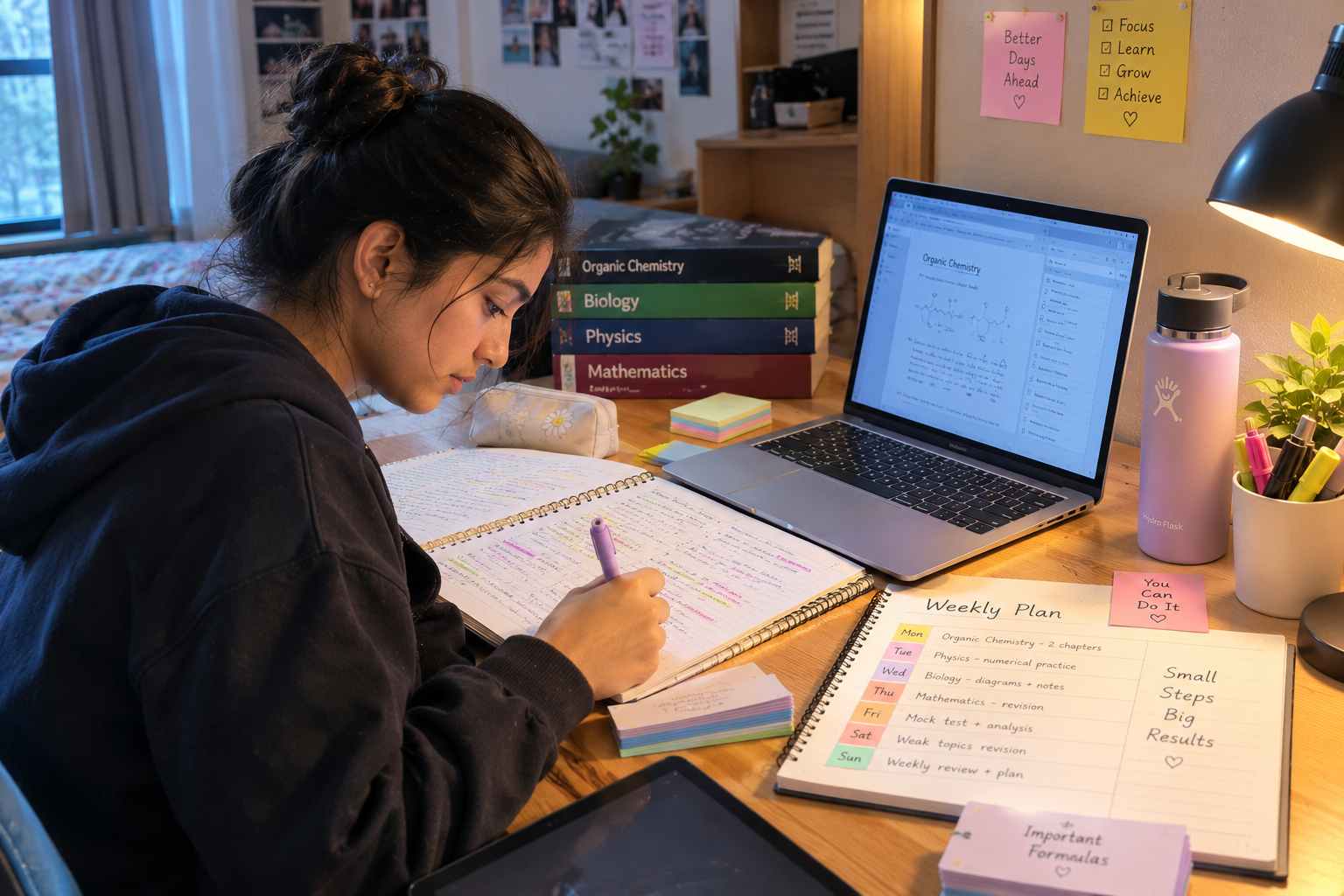
How to Make a Study Timetable You Will Actually Follow

Learn how to make a realistic study timetable that fits your daily routine, balances subjects, includes breaks, and helps you stay consistent.
A study timetable can make your day easier to manage. Instead of wondering what to study next, you already know what needs to be done and when you plan to do it.
The problem is that many students create timetables that look perfect on paper but are difficult to follow in real life. They schedule too many hours, leave no room for breaks, and try to complete more work than they can realistically handle.
A useful study timetable should be realistic. It should fit around your classes, responsibilities, meals, sleep, and other activities. It should also give you enough flexibility when something unexpected happens.
The goal is not to create the busiest timetable possible. The goal is to create a study routine that you can follow consistently.
What Is a Study Timetable?
A study timetable is a plan that organizes your study tasks across specific days and times. It helps you decide which subject or task you will work on during each study period.
Your timetable can be simple or detailed. You can use a notebook, calendar, spreadsheet, planner, or digital tool. The format matters less than whether you actually use it.
A good timetable should answer three basic questions: What will you study? When will you study it? What do you want to complete?
For example, instead of writing “Mathematics” for an entire evening, you could write “Complete algebra practice questions.” A specific task makes it easier to start and easier to know when the session is finished.
Why Do Study Timetables Often Fail?
Before creating a better timetable, it helps to understand why some schedules do not work.
- Students often schedule more study hours than they can realistically maintain.
- Some timetables contain no proper breaks or free time.
- Large and vague tasks make it difficult to know what to do during a study session.
- Some schedules do not account for school, college, work, commuting, or other responsibilities.
- A timetable can become frustrating when one missed session causes the entire plan to fall apart.
Your timetable should support your life rather than control every minute of it. Leave some flexibility so you can adjust your plan when necessary.
Start by Listing Your Responsibilities
Do not begin by filling every available hour with studying. First, identify the activities that already have a fixed place in your day.
- Write down your school, college, classes, or work schedule.
- Add commuting or travel time if it affects your available study hours.
- Include meals and other regular responsibilities.
- Set aside enough time for sleep and rest.
- Note activities such as exercise, family responsibilities, or other commitments.
Once these activities are on your schedule, look at the remaining time. That is where your study sessions can fit.
This approach prevents you from creating a timetable that looks good but ignores everything else you need to do during the day.
Decide What You Need to Study
Next, make a list of the subjects and topics you need to cover. Do not immediately assign times to them.
First understand the amount and type of work you have. You may have new chapters to learn, practice questions to complete, assignments to finish, and older topics to revise.
Then divide large subjects into smaller tasks.
- Instead of writing “study physics,” choose one chapter or concept.
- Instead of writing “study mathematics,” choose a specific group of problems.
- Instead of writing “revise biology,” choose the topics you need to review.
- Instead of writing “prepare for the exam,” divide the syllabus into smaller sections.
Smaller tasks make your timetable more actionable. You know exactly what to do when a study session begins.
Prioritize Your Subjects
Not every subject or topic needs the same amount of attention. Your timetable should reflect your current priorities.
Consider which subjects are difficult for you, which topics are unfinished, and which assessments are coming up soon.
Put challenging work into the periods when you normally have the most energy and concentration. Use lower-energy periods for lighter tasks such as reviewing notes or organizing study materials.
You should also revisit your priorities regularly. A topic that is low priority today may become more important when an exam gets closer.
Divide Your Day Into Study Blocks
Instead of creating one long study period, divide your available time into smaller blocks.
Each block should have one clear purpose. For example, you could use one session for learning a new topic, another for practice questions, and another for revision.
You do not need to make every study block the same length. A difficult task may require a longer focused session, while a quick revision task may need less time.
If you are using the Pomodoro Technique, you can also divide larger study blocks into focused sessions followed by short breaks. This can make long periods of studying feel more manageable.
Include Breaks in Your Timetable
Breaks should be part of your timetable rather than something you take only after becoming exhausted.
A short break gives you time to step away from your desk, drink water, stretch, walk around, or rest your eyes.
Be careful about using social media as your default break activity. If you find it difficult to stop scrolling, a short break can quickly become much longer than planned.
If distractions are making it difficult to focus, you can read what to do when you cannot focus on studying for practical ways to make your study sessions easier to manage.
Make Your Study Timetable Realistic
The most important rule for creating a study timetable is to be honest about your available time.
If you normally struggle to study for long periods, do not suddenly schedule an extremely demanding routine. Start with manageable study blocks and build your consistency over time.
You should also avoid filling every free minute. Leave some space between tasks so an unexpected event does not destroy the rest of your day.
A realistic timetable may look less impressive than an extreme timetable, but it is much easier to follow.
A timetable works best when it matches the life you actually live, not the perfect day you imagine.
Use Daily and Weekly Planning Together
A weekly plan gives you a bigger picture, while a daily plan tells you exactly what to do today.
At the beginning of the week, review your subjects, upcoming deadlines, exams, and unfinished tasks. Decide what you want to accomplish during the week.
Then create a shorter plan for each day. Move tasks around when your workload changes instead of trying to follow the original schedule at all costs.
This combination gives you structure without making your routine too rigid.
Example of a Simple Study Timetable
A simple timetable could divide your evening into several focused blocks rather than assigning one large period to “study.”
- Start with a focused session for your most difficult subject.
- Take a short break before beginning the next task.
- Use the next session for practice questions or assignments.
- Take another break before starting revision.
- Finish with a lighter review session and prepare the next day's tasks.
The exact times are less important than the structure. Choose times that fit your actual daily routine.
You can also change the order depending on when you normally feel most focused.
What to Do When You Miss a Study Session
Missing one session does not mean your entire timetable has failed.
Students often make the mistake of trying to recover every missed task immediately. This can create an unrealistic schedule for the rest of the day.
Instead, look at what you missed and decide whether it should be moved to another day, shortened, or given a higher priority.
Then continue with the next useful task. The purpose of a timetable is to help you organize your work, not to make you feel guilty whenever your day changes.
Review Your Timetable Every Week
Your first timetable may not be perfect. That is normal.
At the end of each week, look at what worked and what did not. Ask yourself whether your study sessions were realistic, whether you gave enough time to difficult subjects, and whether distractions affected your schedule.
Then make small changes for the following week.
- Move difficult subjects to periods when you have more energy.
- Reduce unrealistic workloads when you repeatedly leave tasks unfinished.
- Increase revision time when you are forgetting older topics.
- Add more flexibility when unexpected activities regularly interrupt your schedule.
- Keep the parts of your timetable that you consistently follow.
Small adjustments can make your timetable increasingly useful over time.
Make Your Timetable Easier to Follow
A timetable tells you what to do, but your environment also affects whether you actually follow it.
Before a study session begins, keep your books, notes, stationery, and other materials ready. Put your phone away if it frequently interrupts your concentration.
You can also create accountability by studying alongside other focused students. When you know that a study session has started, it may become easier to follow the plan instead of delaying it.
StudyMates lets you study alongside other students online when you want a more structured study environment.
If you are interested in studying with others, you can also learn about body doubling for students and how another person's presence can support accountability.
Keep Your Timetable Simple
You do not need a complicated productivity system to study consistently.
Start with your fixed responsibilities, identify your available study time, list your important tasks, and divide them into manageable blocks.
Add breaks and leave some flexibility. Then review the timetable each week and make small changes when necessary.
The best study timetable is not the one with the most hours. It is the one that helps you start your work, complete meaningful tasks, and return to studying the next day.
Frequently Asked Questions
How do I make a study timetable?
Start by listing your fixed daily responsibilities and then identify the realistic time available for studying. Divide your subjects into specific tasks and assign those tasks to focused study blocks.
How many hours should a study timetable include?
There is no single number that works for every student. Your study hours should depend on your goals, responsibilities, subjects, energy, and available time.
Should I study every subject every day?
Not necessarily. You can rotate subjects across the week and give more time to topics that need additional attention.
What should I do if I cannot follow my timetable?
Look at why the schedule is failing instead of immediately adding more hours. Reduce unrealistic tasks, add flexibility, and make each study session more specific.
Is it better to study in the morning or at night?
The best time depends on when you can concentrate well and what your daily responsibilities allow. Try scheduling demanding tasks during periods when you normally have the most energy and focus.