How to Study When You Cannot Focus: Simple Tips

Learn how to study when you cannot focus by reducing distractions, using smaller goals, improving your study space, and building better study habits.
You sit down to study, open your book, and try to begin. A few minutes later, you check your phone, open another tab, look around the room, or realize you have been staring at the same page without understanding it.
Having trouble focusing does not always mean you are lazy or incapable of studying. Sometimes the task is unclear. Sometimes there are too many distractions. Other times, you may simply be mentally tired or trying to study for too long without a clear purpose.
The good news is that you do not need perfect concentration before you can start studying. You can create conditions that make focusing easier and build your attention gradually.
This guide explains what to do when you cannot focus on studying and how to make your study sessions simpler, more intentional, and easier to repeat.
Why Is It So Hard to Focus While Studying?
There can be many reasons why studying feels difficult.
Your phone may constantly compete for your attention. Your study area may be noisy or uncomfortable. The subject may feel boring or difficult. You may have too many tasks in your head and not know where to begin.
Sometimes the problem is also the way you approach the study session. Sitting down with the goal of “studying everything” gives your brain a huge and unclear task.
Instead of trying to force yourself to concentrate harder, start by identifying what is making the session difficult.
Once you know the problem, you can make a small change that removes some of the friction.
1. Start With One Small Task
When you cannot focus, do not begin by thinking about everything you need to finish.
Choose one small task. It could be reading two pages, solving a few questions, reviewing one concept, or creating a short set of flashcards.
A small task gives your session a clear starting point. Once you begin, continuing can feel easier than trying to convince yourself to study for a long period before doing anything.
Write the task down before you start. For example, instead of writing “Study biology,” write “Review the cell structure diagram and answer five questions.”
When the task is specific, you know exactly what you are supposed to do.
2. Remove the Biggest Distractions
It is difficult to focus when distractions are constantly available.
Start with the distraction that takes most of your attention. For many students, this may be their phone.
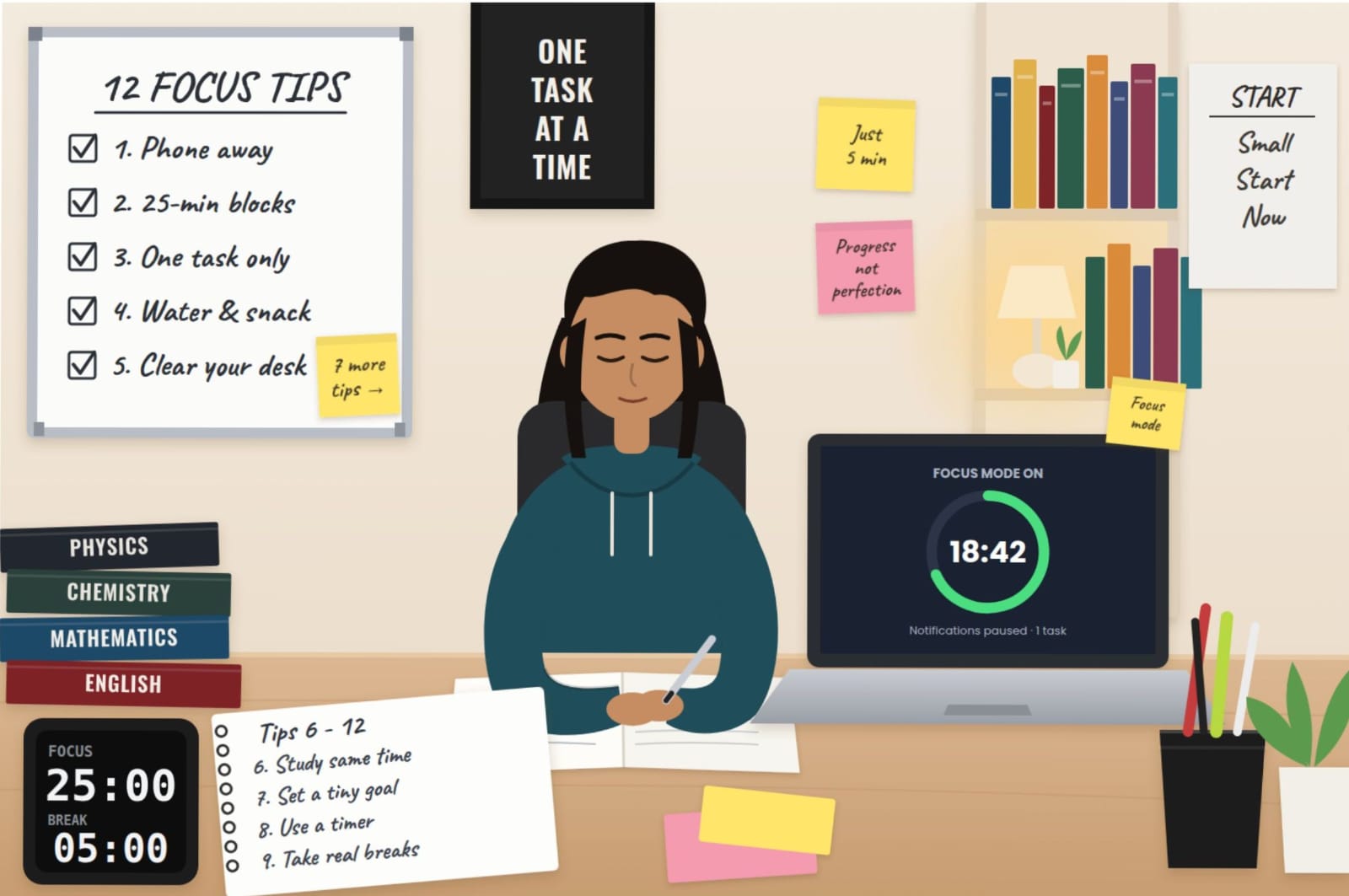
Put your phone somewhere you cannot easily reach it. Turn off unnecessary notifications and close browser tabs that are unrelated to your study task.
Keep your desk simple. Put only the materials you need for the current task in front of you.
You do not need to create a perfect study room. You simply want to make distractions less convenient.
If you often lose focus because of digital distractions, you can also read these practical ideas for dealing with the mental fatigue that can come from long periods of scrolling.
3. Make Your Study Goal Specific
A vague goal can make it difficult to know where to start.
Compare “I need to study chemistry” with “I will review chemical equations and solve ten practice questions.” The second goal gives you a clear action.
Before every session, decide what you want to accomplish.
- Choose one topic you want to understand.
- Choose a specific number of questions to practice.
- Choose a chapter section you want to review.
- Choose a small set of flashcards you want to test yourself on.
- Choose one concept you want to explain in your own words.
You do not need a complicated plan. One clear goal is often enough to give your session direction.
4. Use Short Focused Sessions
If your attention is low, trying to study for several hours without a break can make the task feel even harder.
Instead, start with a shorter focused session. Decide what you want to complete and give that task your full attention for a manageable period.
When the session ends, take a short break and decide whether you are ready for another session.
The exact length does not have to be the same every day. The important idea is to create a clear period for focused work instead of allowing the study session to become an undefined block of time.
As your ability to focus improves, you can gradually make your sessions longer when necessary.
5. Change How You Study
Sometimes you cannot focus because the study method is too passive.
Reading the same notes repeatedly can become boring, especially when you are not actively doing anything with the information.
Change the activity. Turn notes into questions. Solve practice problems. Create flashcards. Draw a diagram. Explain the concept aloud. Write a short summary without looking at your notes.
Active study gives your brain something specific to do.
For example, after reading a section, close your textbook and write down the three most important ideas you remember. Then check your notes and see what you missed.
You can also learn more about what happens when you learn and use that understanding to make your study sessions more active.
6. Try the Five-Minute Start
Sometimes the hardest part is starting.
If you keep delaying your study session, tell yourself that you only need to work for five minutes. Open the book, write the first answer, solve the first problem, or review the first concept.
The purpose is not to complete the entire study session in five minutes. The purpose is to overcome the resistance that happens before starting.
After five minutes, decide whether you can continue. If you can, keep going. If you genuinely need a break, take one and return later with another small starting point.
Starting small can make a large task feel less intimidating.
7. Study in a Different Environment
Your environment can affect how easy it feels to focus.
If your usual study location is noisy, uncomfortable, or associated with distractions, try changing the environment.
You could use a quiet room, library, study area, or another place where you can work without unnecessary interruptions.
Keep your setup simple. Bring the books, notebook, laptop, and other materials you actually need.
A consistent environment can also become a signal that it is time to work. When you repeatedly use the same space for focused study, starting the session can become more familiar.
8. Take Care of Your Basic Needs
Sometimes focusing is difficult because you are uncomfortable or mentally drained.
Before starting a long study session, check whether you need water, food, a short movement break, or a more comfortable workspace.
Sleep also matters. If you regularly try to study when you are extremely tired, concentrating can become much harder.
Do not treat every focus problem as a productivity problem. Sometimes the right solution is to take care of yourself and return to studying when you are in a better state to work.
9. Stop Switching Between Tasks
Constantly moving between subjects, apps, messages, and unrelated tasks can make it harder to stay engaged with one activity.
Choose one task and stay with it for the current session.
If another task comes to mind, write it on a separate list instead of immediately switching to it. You can return to that list after your current session.
This simple habit can prevent small distractions from turning into long interruptions.
Give your current task a fair chance before deciding that you cannot focus.
10. Use Accountability
Sometimes studying alone makes it easier to procrastinate.
You may start checking your phone, changing your task, or taking unnecessary breaks because there is no external structure keeping you engaged.
Accountability can make starting and staying focused easier. One option is to study alongside other people who are also working toward their own goals.
This is sometimes called body doubling. You do not have to study the same subject as someone else. Simply having another person working nearby can provide a stronger sense of structure.
You can explore how body doubling can support studying with other people.
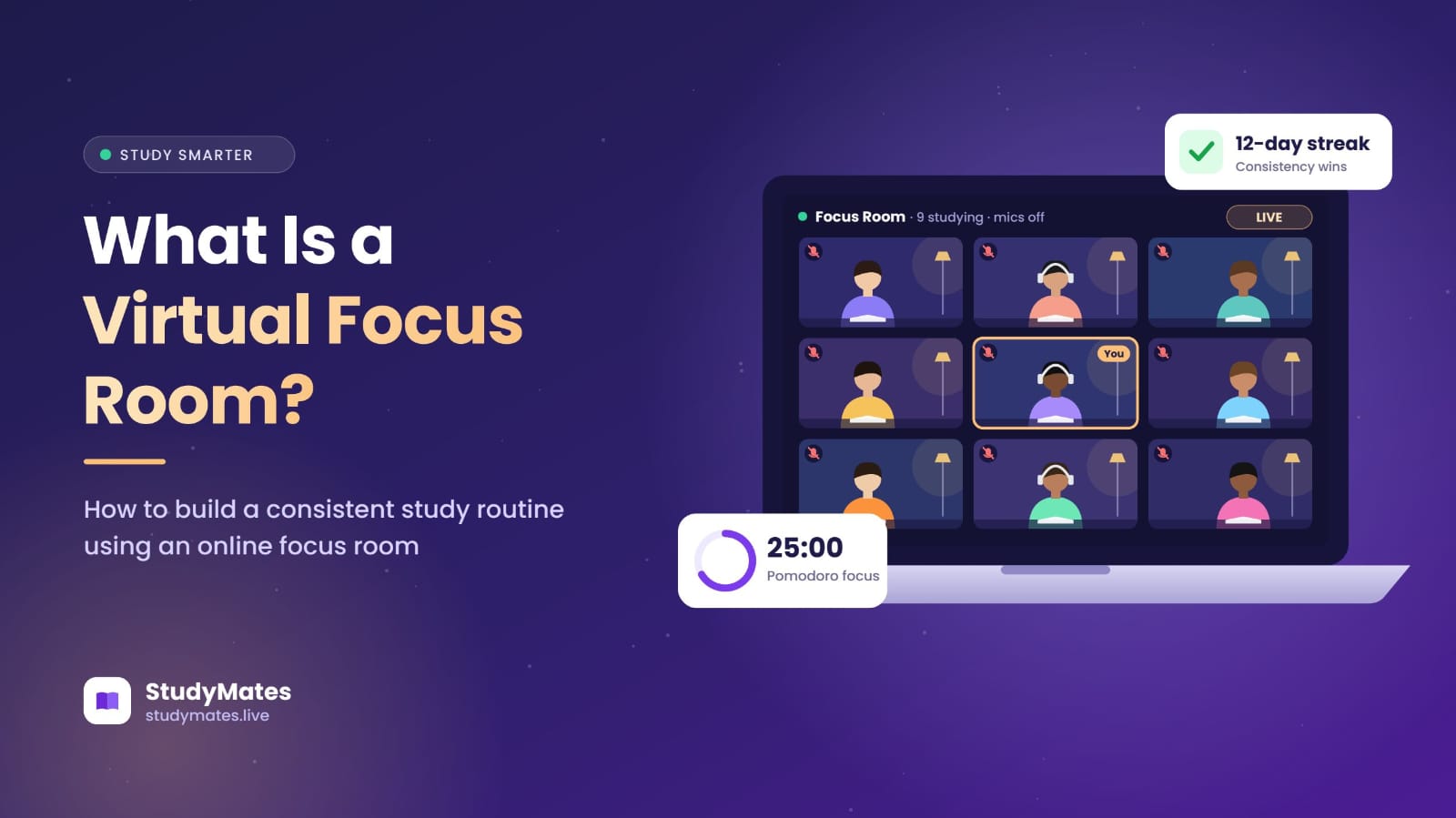
StudyMates provides virtual study rooms where you can work alongside other focused students and create a more structured study environment.
11. Use a Simple Focus Routine
Instead of deciding how to study from scratch every day, create a basic routine.
Your routine might look like this:
- Choose one specific study goal.
- Clear your desk and remove unnecessary distractions.
- Put your phone away or silence notifications.
- Start a focused study session.
- Use active study instead of only rereading.
- Take a short break when the session ends.
- Review what you completed and choose the next task.
Following the same basic process can make studying feel more predictable.
You can change the subjects and tasks while keeping the overall routine the same.
12. Do Not Wait to Feel Motivated
You may think you need motivation before you can focus, but motivation does not always appear before action.
Sometimes you begin with a small task, make some progress, and then become more willing to continue.
Instead of asking, “Do I feel like studying?” ask, “What is the smallest useful thing I can do right now?”
That question changes the focus from your current mood to your next action.
You do not need to feel excited about every subject. You only need to begin with something manageable.
What to Do When Your Mind Keeps Wandering
If your attention keeps moving away from the task, do not immediately give up.
Notice what distracted you. Was it your phone? A thought about another task? A difficult question? Boredom? Noise?
Write the distraction down if necessary and return to your task.
If the same problem keeps happening, change something about your environment or study method. For example, move your phone farther away, choose a quieter location, or replace passive reading with practice questions.
The goal is not to have zero distractions. The goal is to notice them and return to the task more quickly.
Build Focus Gradually
You do not need to transform your concentration in one day.
Start with realistic study sessions. Remove one major distraction. Set one clear goal. Use an active study method. Then repeat the process.
Over time, you can learn which environments, times, and techniques make focusing easier for you.
Keep your routine simple enough that you can use it on ordinary days, not only when you feel highly motivated.
When you cannot focus, do not demand a perfect study session; make the next five minutes easier.
Frequently Asked Questions
Why can I not focus when I study?
Difficulty focusing can come from distractions, unclear goals, mental tiredness, an uncomfortable environment, or a study method that feels too passive. Identify the biggest problem and make one small change before starting again.
How can I focus on studying immediately?
Choose one small and specific task, remove your biggest distraction, and start with a short focused session. You do not need to feel completely motivated before beginning.
What should I do if I keep checking my phone while studying?
Move your phone away from your study area and silence unnecessary notifications. If you need your phone for studying, use only the required app and remove other distractions from your immediate view.
Is it better to study for a long time or in short sessions?
The best approach depends on your task, schedule, and ability to concentrate. When focus is difficult, shorter focused sessions can be a practical starting point before gradually increasing your study time.
Can studying with other people help me focus?
Studying alongside other focused people can provide structure and accountability. You can work independently while having the presence of others encourage you to stay with your task.