How to Focus While Studying Without Getting Distracted

Learn how to focus while studying by reducing distractions, creating a better study environment, using focused sessions, and building consistent habits.
Learning how to focus while studying can make a big difference in how you use your time. You may have enough hours available, but distractions can make it difficult to turn those hours into productive study sessions.
Your phone may keep getting your attention. Messages can interrupt you. Open browser tabs can tempt you to check something unrelated. Even a messy desk or unclear study plan can make it harder to begin.
The good news is that you do not need perfect concentration before you start studying. You can make focus easier by changing your environment, reducing distractions, and giving each study session a clear purpose.
The goal is not to eliminate every possible distraction. The goal is to make focused studying easier than constantly switching your attention.
Why Is It So Hard to Focus While Studying?
Studying often requires sustained attention. You may need to read difficult material, solve problems, memorize information, write notes, or understand a new concept.
Distractions provide an easy alternative. Checking your phone takes less effort than solving a difficult problem. Opening social media is easier than reading a complicated chapter.
Sometimes the problem is also unclear planning. If you sit down and simply tell yourself to “study,” you may spend time deciding what to do instead of actually doing it.
Making your study task specific can remove some of that friction. Instead of “study biology,” choose a clear task such as reviewing one topic and answering a set of questions.
Choose One Study Task Before You Start
One of the simplest ways to improve focus is to decide what you will work on before opening your book or laptop.
A specific task gives your attention a clear direction. It also gives you a way to measure progress when the session ends.
- Choose one subject or topic for the current session.
- Decide exactly what you want to complete.
- Keep the materials for that task ready before you begin.
- Write down unrelated tasks instead of switching to them immediately.
For example, replace “study mathematics” with “complete the next set of algebra problems.” The second goal tells you exactly what to do.
Remove Your Biggest Distractions
You do not need to remove every distraction from your life. Start with the distractions that interrupt your study sessions most often.
If your phone is the biggest problem, put it away or enable a setting that reduces unnecessary notifications. If websites are distracting you, close unrelated tabs before beginning.
Keep your study area simple. Put only the materials you need for the current task within easy reach.
- Turn off unnecessary notifications before starting.
- Close websites and applications that are unrelated to your study task.
- Keep your phone away if you repeatedly check it while studying.
- Tell people around you when you need uninterrupted study time.
- Keep your desk organized so you can start without searching for materials.
The fewer decisions you need to make during a study session, the easier it can be to stay with the task.
Use a Focused Study Timer
A timer can give your study session a clear beginning and ending point. Instead of thinking about studying for an entire afternoon, you can focus on one defined session.
You can use the Pomodoro Technique as one option. The traditional approach uses focused work periods followed by short breaks, but you can adjust the timing to suit your concentration.
Choose a task, start the timer, and focus on that task until the session ends. Then take a planned break before deciding what to do next.
Do not become too focused on the number of minutes. The timer is there to create structure, not to become another source of pressure.
If you want a more detailed approach, you can read the 2357 study method and compare different ways of structuring your study time.
Make Your Study Environment Focus-Friendly
Your surroundings can affect how easy it feels to concentrate. A study environment does not need to be perfect, but it should make your intended activity easy to start.
Choose a place where you can sit comfortably and keep your necessary materials nearby. Good lighting and a reasonably organized desk can also make the space feel ready for studying.
Try to separate your study space from activities that regularly distract you. If possible, avoid studying directly next to a television or in a place where people frequently interrupt you.
You can also prepare your environment before the session begins. Fill your water bottle, collect your books, open the required notes, and remove unnecessary items from your desk.
Stop Trying to Multitask While Studying
Many students believe they can study while also checking messages, listening to notifications, browsing websites, or switching between several tasks.
Frequent switching makes it harder to give one task your full attention. It can also make a simple study task take much longer than expected.
Try single-tasking instead. Choose one activity and stay with it for the duration of your focused session.
If you suddenly remember something unrelated, write it down on a small task list. You can deal with it later instead of immediately leaving your study task.
This simple habit can prevent small thoughts from turning into long periods of distraction.
Use Breaks to Protect Your Focus
Focusing does not mean sitting at your desk without stopping for hours. Planned breaks can make your routine easier to maintain.
When you finish a focused session, step away for a short period. Stand up, stretch, drink water, walk around, or simply rest.
Try to avoid turning every break into a long entertainment session. If you open social media and find it difficult to stop, choose a different break activity.
If you often feel mentally tired after spending a lot of time on your phone, you can read why your brain feels tired after scrolling for hours.
Start Small When You Cannot Concentrate
Sometimes the hardest part is simply starting.
If a large task feels overwhelming, make it smaller. Instead of deciding to finish an entire chapter, decide to read the first section. Instead of planning to complete every practice problem, start with a small group.
Once you begin, continuing may feel easier because you are no longer dealing with the uncertainty of getting started.
You can also use a short starting session. Tell yourself that you only need to focus for a limited period. When that session ends, decide whether you want to continue.
This removes some of the pressure associated with thinking about the entire workload at once.
Create a Daily Focus Routine
Focus becomes easier to manage when studying becomes part of a regular routine.
Choose study periods that fit naturally into your day. You may prefer studying in the morning, afternoon, evening, or a combination of different times.
What matters is creating a pattern you can repeat.
- Choose your most important study task before the session starts.
- Study in a place where distractions are manageable.
- Use a consistent starting routine.
- Keep your phone and unnecessary notifications away.
- Take planned breaks instead of waiting until you are completely exhausted.
- Review what you completed before ending the day.
You do not need a complicated routine. A simple process that you repeat consistently can become easier to follow over time.
Use Accountability When Studying Alone Is Difficult
Some students find it difficult to stay focused when they study completely alone. There is no external structure telling them when to begin, and it can be easy to postpone a difficult task.
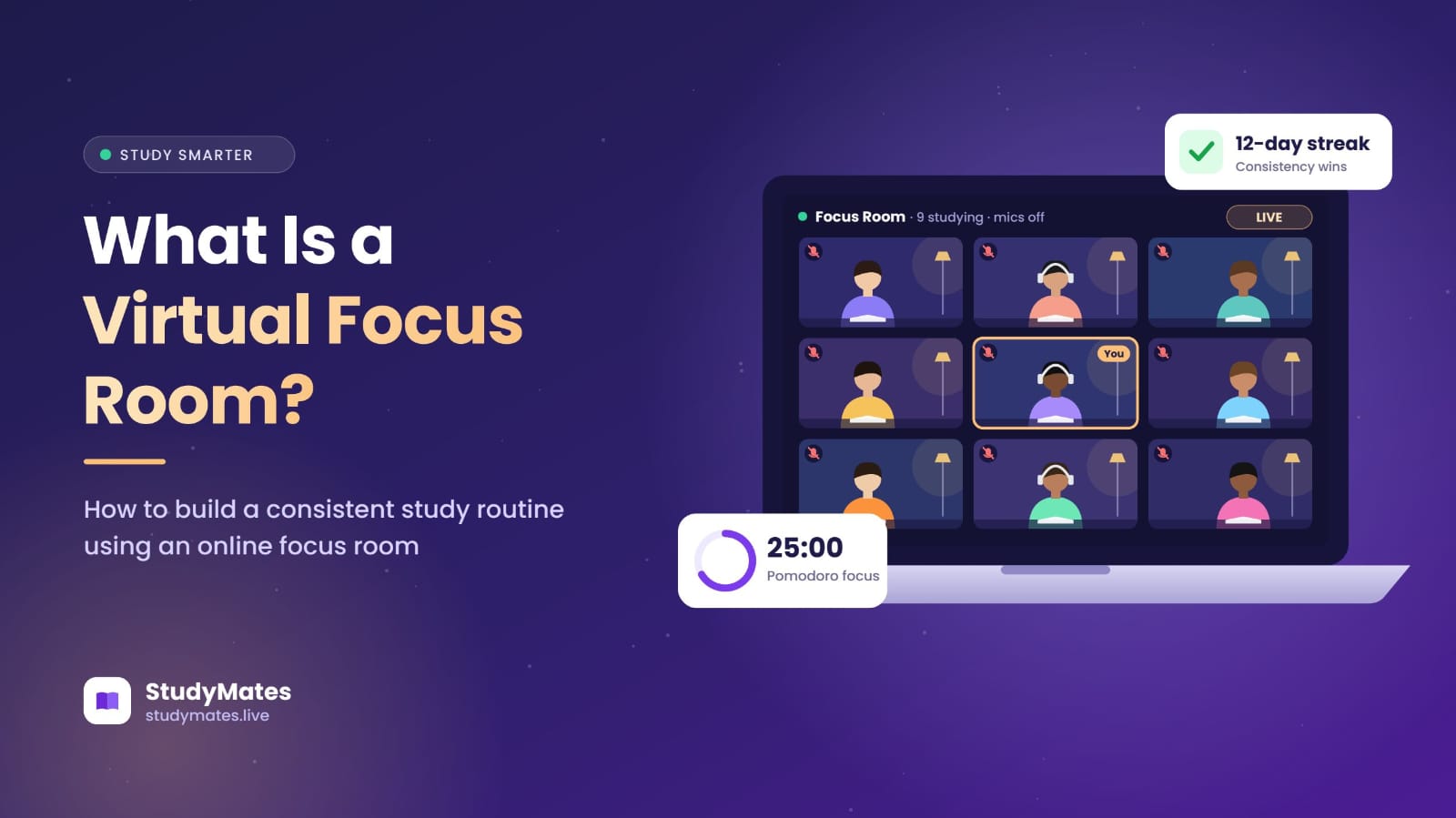
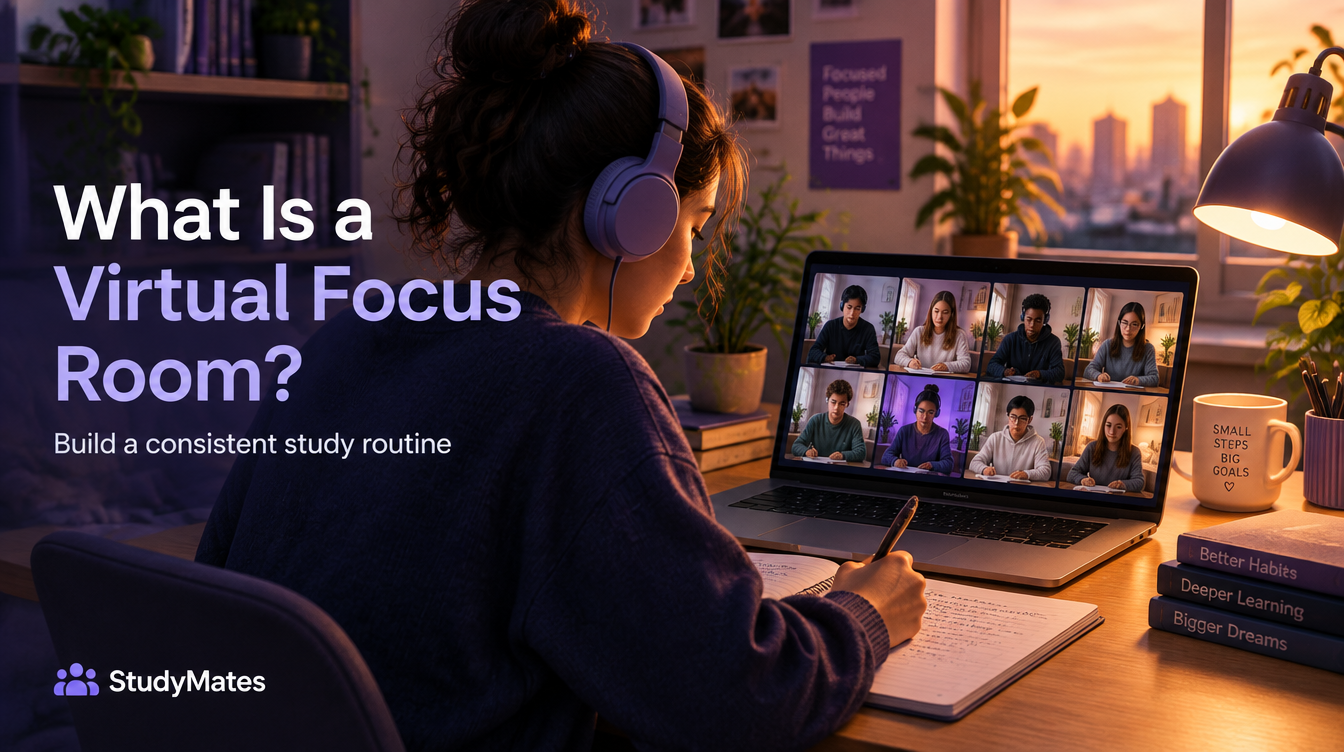
Studying alongside another person can provide a sense of accountability. You do not necessarily need to talk or study the same subject. Simply knowing that someone else is also focused on their work can make the session feel more structured.
This approach is sometimes called body doubling. You can learn more about body doubling for students and how it can fit into a study routine.
StudyMates also provides an online environment where you can study alongside other students when you want additional structure and accountability.
What to Do When You Get Distracted
Getting distracted does not mean your study session has failed.
When you notice that your attention has moved somewhere else, return to the task without spending too much time criticizing yourself.
Ask yourself what caused the distraction. Was your phone nearby? Was the task unclear? Were you tired? Did you choose a study period when your energy was low?
Use the answer to improve your next session.
If you regularly struggle to focus, you can also read what to do when you cannot focus on studying for additional practical ideas.
Focus is not about never getting distracted; it is about noticing the distraction and returning to what matters.
Build Better Focus One Session at a Time
You do not need to completely transform your study habits in one day.
Start with one focused session. Choose one clear task, remove your biggest distraction, and work until the session ends.
Then take a proper break and repeat the process.
Over time, pay attention to what helps you concentrate and what repeatedly breaks your attention. Adjust your environment, schedule, and study methods based on what you learn.
The goal is to make focused studying a normal part of your routine rather than something you only do when an exam is close.
Frequently Asked Questions
How can I focus while studying?
Start with one specific task and remove your biggest distractions before beginning. A focused timer, organized study space, and planned breaks can also make concentration easier.
Why do I get distracted every time I study?
Distractions can come from your phone, environment, unclear tasks, tiredness, or simply having a habit of switching activities. Identify your most common distraction and change one thing at a time.
How long should I study before taking a break?
There is no single study period that works for everyone. Start with a manageable focused session and adjust the length based on how well you can maintain concentration.
Should I keep my phone away while studying?
If your phone frequently interrupts your attention, keeping it away can remove an easy source of distraction. You can also turn off unnecessary notifications or use focus settings.
Can studying with other people improve focus?
Studying alongside other people can provide structure and accountability for some students. The key is to use the shared environment for focused work rather than turning the session into a social activity.